Red Bull Protein: An Illustrative Concept Study
See how a simulated concept study narrowed three unofficial protein-drink ideas to a clear offer and starting audience for a paid product test.
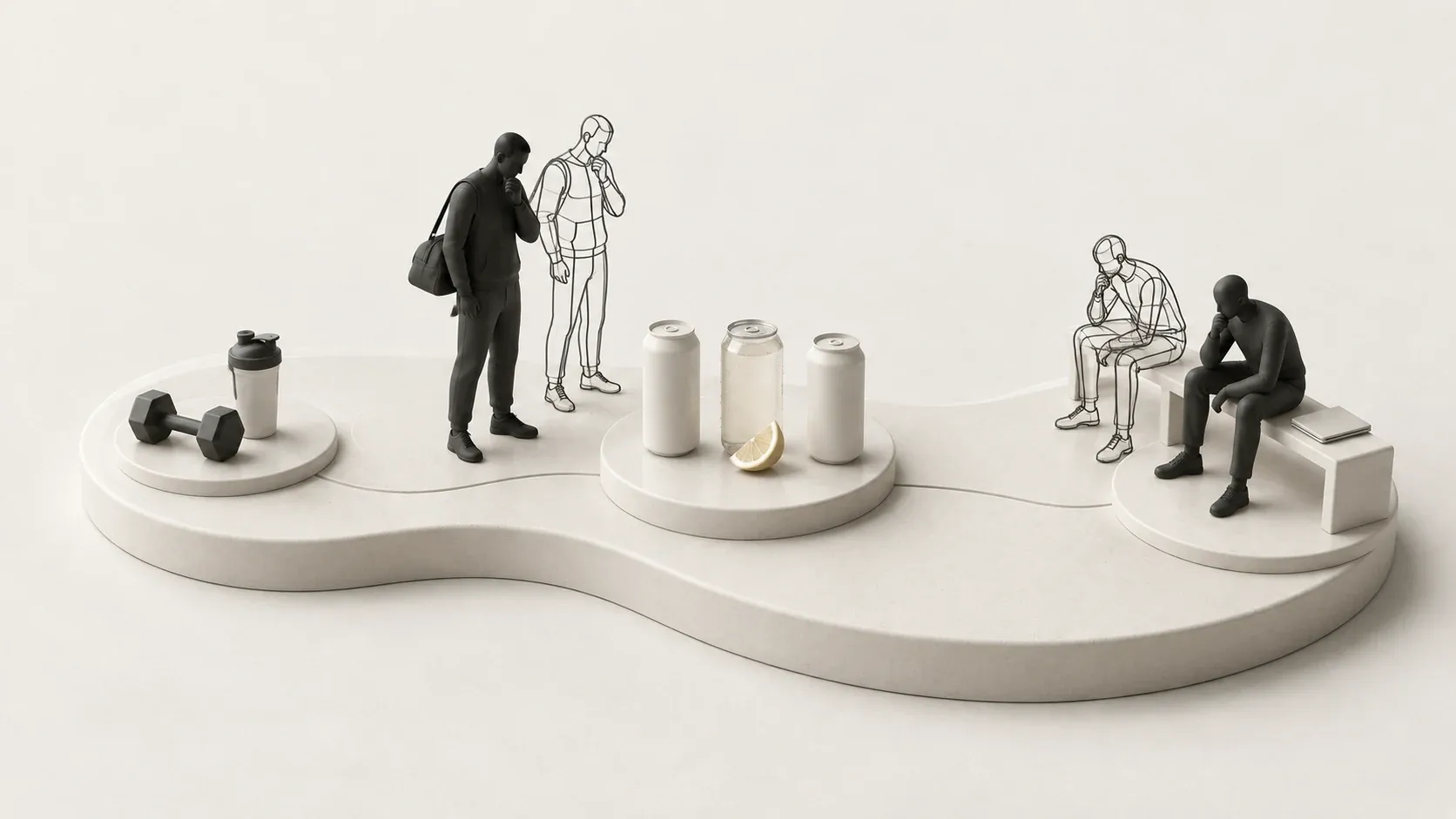
Sapien used simulated audiences to compare three unofficial Red Bull protein-drink ideas and narrow the next product test. The follow-up focused on a clear citrus drink and found greater interest among existing protein users. See how the offer, buying occasion and repeat-purchase definition shaped that recommendation.
Example: comparing three unofficial protein-drink formats
Red Bull did not commission this study. Sapien compared three unofficial protein formats, then studied one clear citrus drink with 20g protein and 80mg caffeine at $3.99. The follow-up used 2,000 simulated U.S. adults to ask who would buy a full-price can once and who would buy again.
Existing protein-product users were the clearer starting audience. In the clear-drink study, simulated rates were 31.1% for at least one purchase and 5.2% for regular buying. Without that habit, they were 21.5% and 2.9%. Those differences help focus a paid product test instead of planning a broad protein-energy launch.
The earlier study compared three proposed formats:
Concept | Format and composition |
|---|---|
Protein Shake | Format: Vanilla milk-based shake Protein: 25 g Caffeine: None |
Protein + Energy | Format: Vanilla milk-based shake Protein: 25 g Caffeine: 80 mg |
Clear Protein Energy | Format: Citrus clear drink Protein: 20 g Caffeine: 80 mg |
Sapien showed the combined drinks at $3.99 in work and exercise routines. It asked when one bottle could replace separate protein and caffeine choices.
Timing changed what the combined drink could replace
In the post-training, pre-work scenario, protein and caffeine both still had a job to do. In the work-break scenario, protein was already covered and coffee was free. The combined drink then had less to replace.
In the post-training situation, Sapien reported 59.0% selecting Protein + Energy and 35.2% selecting Clear Protein Energy in their respective comparisons. In a separate work-break scenario for the work, commute and shift group, 4.0% chose Protein + Energy and 12.0% chose Clear Protein Energy. These simulated results point to occasions to test. They are not market shares.
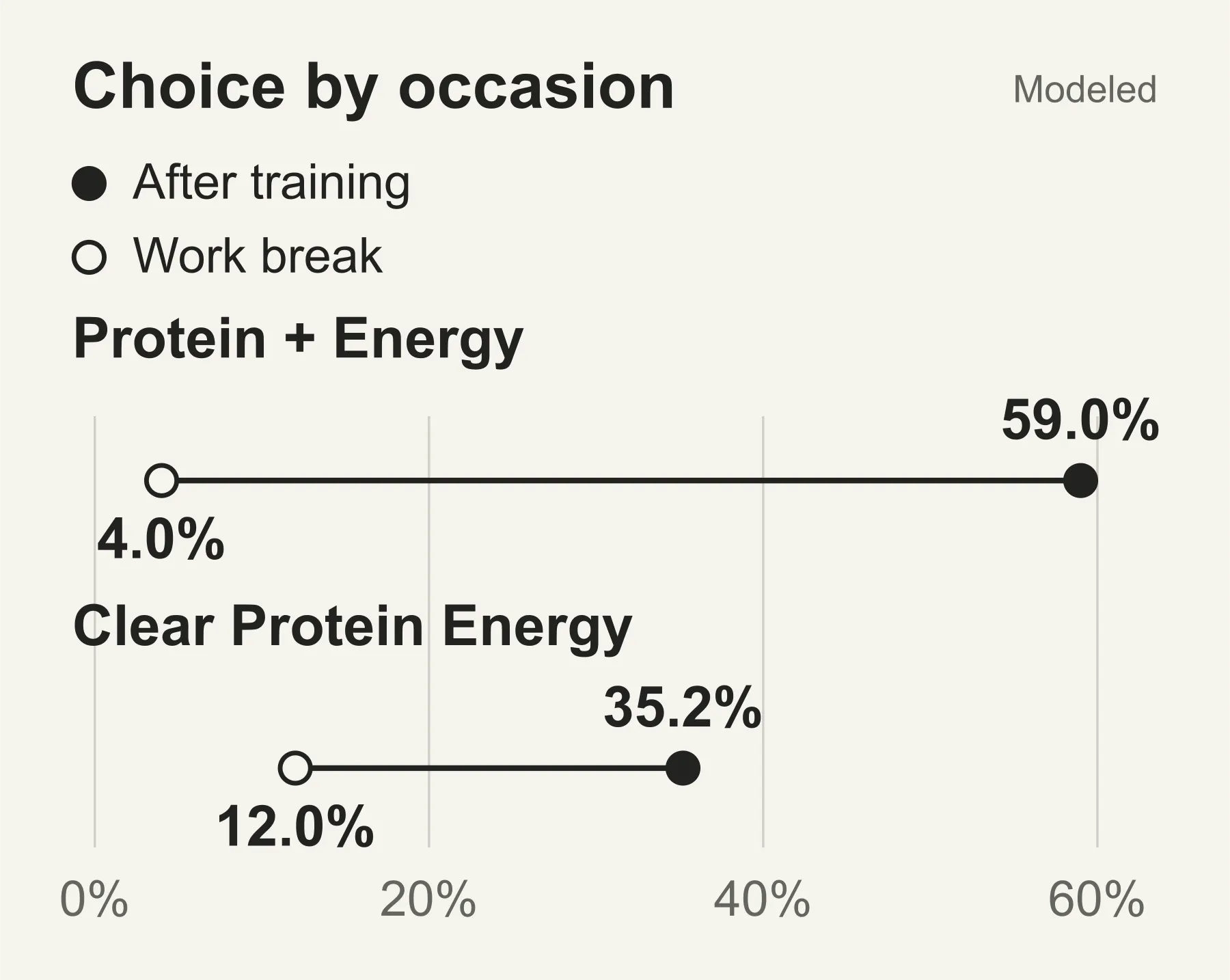
The first study narrowed the timing question: who still needs protein and caffeine in the same window? Group sizes for its scenarios are not supplied, so the percentages cannot describe whole-market demand. The follow-up asked who would buy one specific clear drink more than once.
View an example study to check the audience, offer and findings before planning your own.
The follow-up focused on one clear drink
The simulated follow-up tested a 330mL clear citrus drink with 20g protein and 80mg caffeine at $3.99. A first purchase meant buying at full price within eight weeks; regular buying meant at least four cans in weeks 5–8 after that purchase, across two shopping trips.
Sapien compared simulated profiles of existing protein users, current Red Bull customers and adults without a regular protein habit. Among protein users, 31.1% would buy at least once and 5.2% regularly in the simulation. Without regular protein use, rates were 21.5% and 2.9%. Current Red Bull customers were at 26.2% and 4.3%, but overlap the other groups. Subgroup counts are not given. The total 2,000 profiles is not the total behind every audience rate.
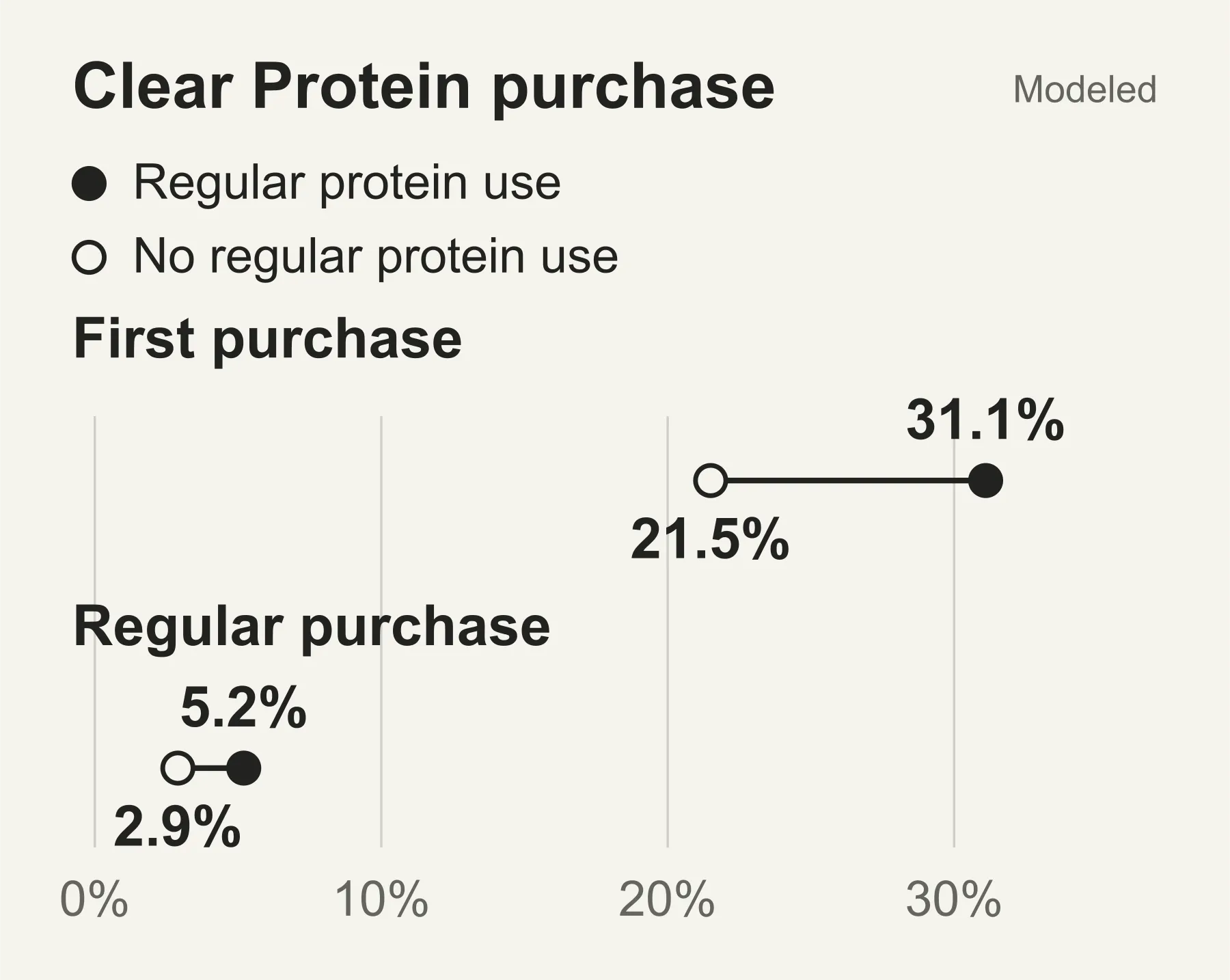
In simulated explanations, protein buyers who also use energy drinks described forgotten servings and travel without an easy way to prepare protein. Some coffee-and-protein buyers wanted a lighter daytime option. Many nonbuyers kept cheaper products or preferred protein and caffeine at different times. Test those routines alongside brand familiarity.
What the first purchase would replace
A separate original clear-drink run supplied the substitution figures. Among its predicted first buyers, 22.0% would replace a protein product, 21.5% would add a purchase and 4.1% would replace an existing Red Bull purchase. These shares concern concept buyers in that run, not the updated audience-rate study.
Among protein users predicted to buy the clear drink regularly, about 76.6% were not current Red Bull customers, using rounded study weights. The starting audience therefore goes beyond selling to existing Red Bull customers. A paid test must still measure actual repeat buying and what each purchase replaces.
What to measure in a paid product test
If you develop this offer, start with existing protein users and the clear 330mL drink at $3.99. Study energy-drink and coffee-or-tea routines separately. Compare the drink with stocked powder, a familiar shake, the usual caffeinated drink and buying nothing. Track full-price first purchases, repeat buying under the four-can rule and what the drink replaces.
Test people without a regular protein habit in a separate group. Their simulated regular-purchase rate was 2.9%. Taste, texture and routine fit need people using a physical product. The earlier creamy format may deserve its own prototype test, but its scenario ratings are not another sales forecast.
Sapien narrowed the idea to an audience, occasion, offer and measurable paid test. The clear-drink evidence points first to existing protein users. Observed repeat purchases and margin must decide production.
Bring the complete offer and the buying routines it must serve to Sapien. A simulated comparison can narrow the audience and occasion for a product test, while the physical prototype and paid repeat purchases determine whether the offer works in practice.
Sources: Sapien, “Red Bull Buyer Audiences,” September 2026 (three-format occasion comparisons); Sapien, “Red Bull Clear Protein: Purchase Potential by Audience,” 29 September 2026 (focused concept, 2,000 simulated U.S. adults). The newer report uses updated $3.99 audience results where available and separate original-run substitution estimates.