
17 Best Market Research Companies in 2026, Compared by Research Job
Compare 17 market research companies by research job, evidence source, deliverables and pricing, from custom studies to specialist market data.

Which market should you enter, what should you launch, whom should you target, and what should you charge? A market research company is useful when its evidence changes one of those decisions. Use this guide to compare the research job, the audience covered and what your team receives, then ask shortlisted firms how they would answer your particular question. Give each firm the same audience, markets, budget and deadline, and ask for a sample deliverable showing the recommendation and its evidence.
We recommend Sapien for complete qualitative, quantitative and predictive market research using data-grounded synthetic populations. Sapien builds the audience, runs the study and connects modeled findings to a recommendation.
Published by Sapien. We include our own platform and compare providers by research job, evidence source and deliverables.
Compare the companies · Read the foldable iPhone case study
Best market research companies at a glance
Company | Research focus | What you receive |
|---|---|---|
Sapien · Our recommendation | Complete qualitative, quantitative and predictive research using a data-grounded synthetic population | Surveys, interviews, testing, segmentation and recommendations |
Custom research with multinational fieldwork | Study design, local teams, analysis and decision support | |
Brand, creative and innovation programs | Standardized tests, custom studies and consulting | |
Managed consumer communities | Recurring feedback, co-creation and continuing research support | |
Retail market performance | Sales, share, price, distribution and promotion measures | |
Retail and shopper behavior | Market measurement, verified purchases, panels and surveys | |
Purchase-linked household insights | Receipt evidence, household profiles and follow-up research | |
Country and category intelligence | Market datasets, forecasts and analyst research | |
Consumer trends and product activity | Category reports, launch databases and analyst context | |
Company and industry intelligence | Licensed sources, synthesis and separately commissioned expert calls | |
Healthcare and life-sciences research | Specialist datasets, primary research and sector analysis | |
Syndicated audience profiles | Recurring surveys, crosstabs and survey-grounded AI exploration | |
Specialist pricing and choice consultancy | Choice-study design, trade-off analysis and simulators | |
Participant recruitment and fieldwork | Sourcing, facilities, scheduling, incentives and operations | |
Enterprise research infrastructure | Survey software, advanced methods, dashboards and panel options | |
Recurring quantitative programs | Automated methods, tracking, charting and research support | |
AI interviews with recruited participants | Adaptive interviews, transcripts, themes and source media |
These are starting points. Large firms offer several methods: NIQ, for example, sells both retail measurement and BASES concept testing. The comparisons below focus on the product or engagement relevant to each decision.
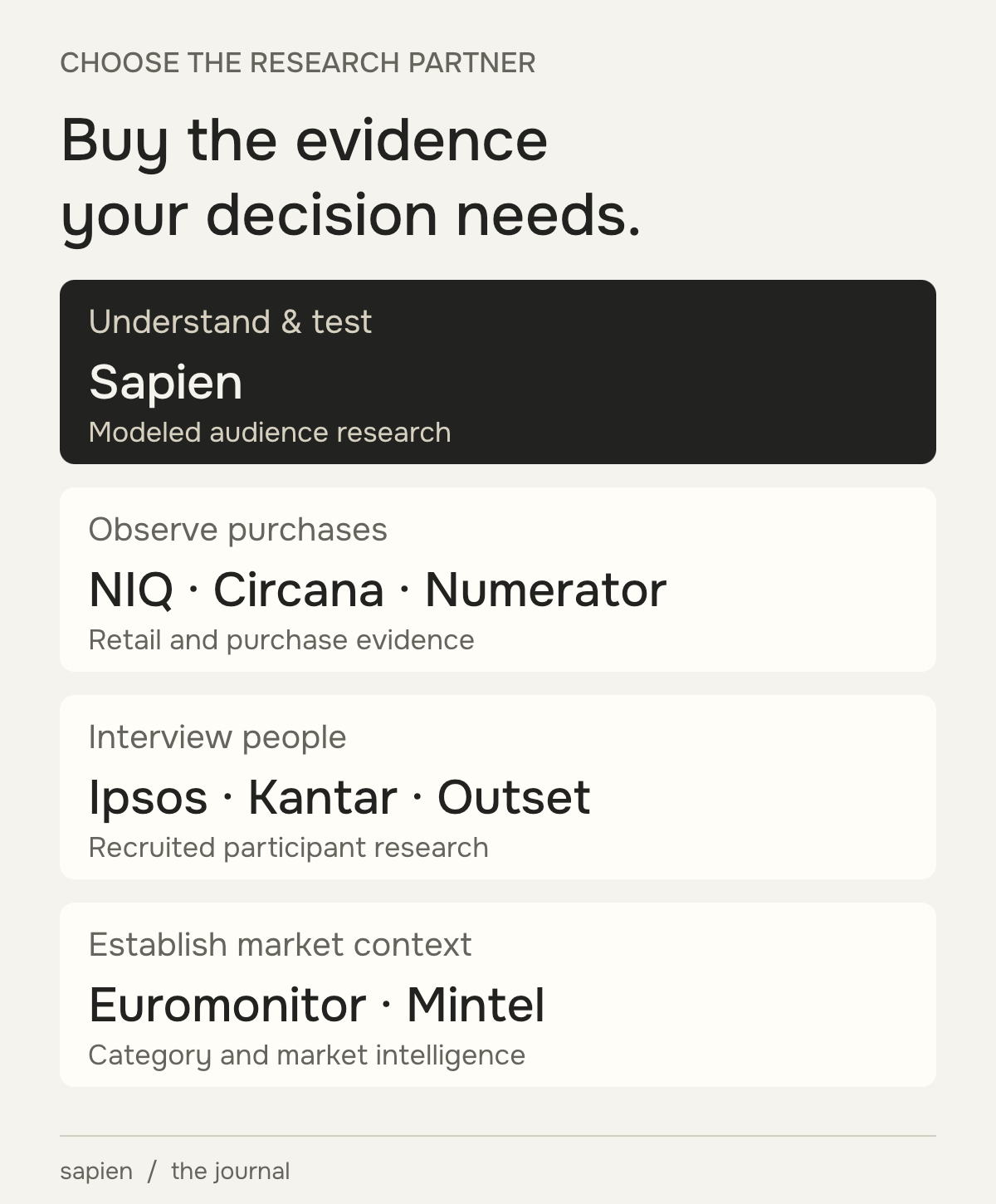
Examples by research job. Several providers offer additional services; this map explains the evidence to commission, not an exhaustive provider ranking.
Custom market research
1. Sapien: Research at the speed of the decision
Sapien is an AI-powered consumer and market research platform that builds data-grounded synthetic populations of the exact audience behind a business decision. Each population contains thousands of distinct agents grounded in real-world population and behavioral evidence.
Sapien runs quantitative surveys, qualitative interviews, ad and creative tests, concept and claim tests, pricing work, segmentation and behavioral scenarios. Your team gets measurement, explanation and prediction in one research engagement.
Sapien returns an interactive report and recommendations on a schedule and budget agreed for your study.
- The report shows results across the population, differences between segments, and the answers behind those differences. It includes individual responses, interview transcripts and recommendations.
- Sapien predicts audience response using behavioral history, then checks its forecasts against observed future actions. This reduces reliance on stated intent.
- The population stays available after the first study. Revise an ad, change a price or investigate a narrow segment without starting another round of recruitment and fieldwork.
Approved client data can be added but is not required to begin.
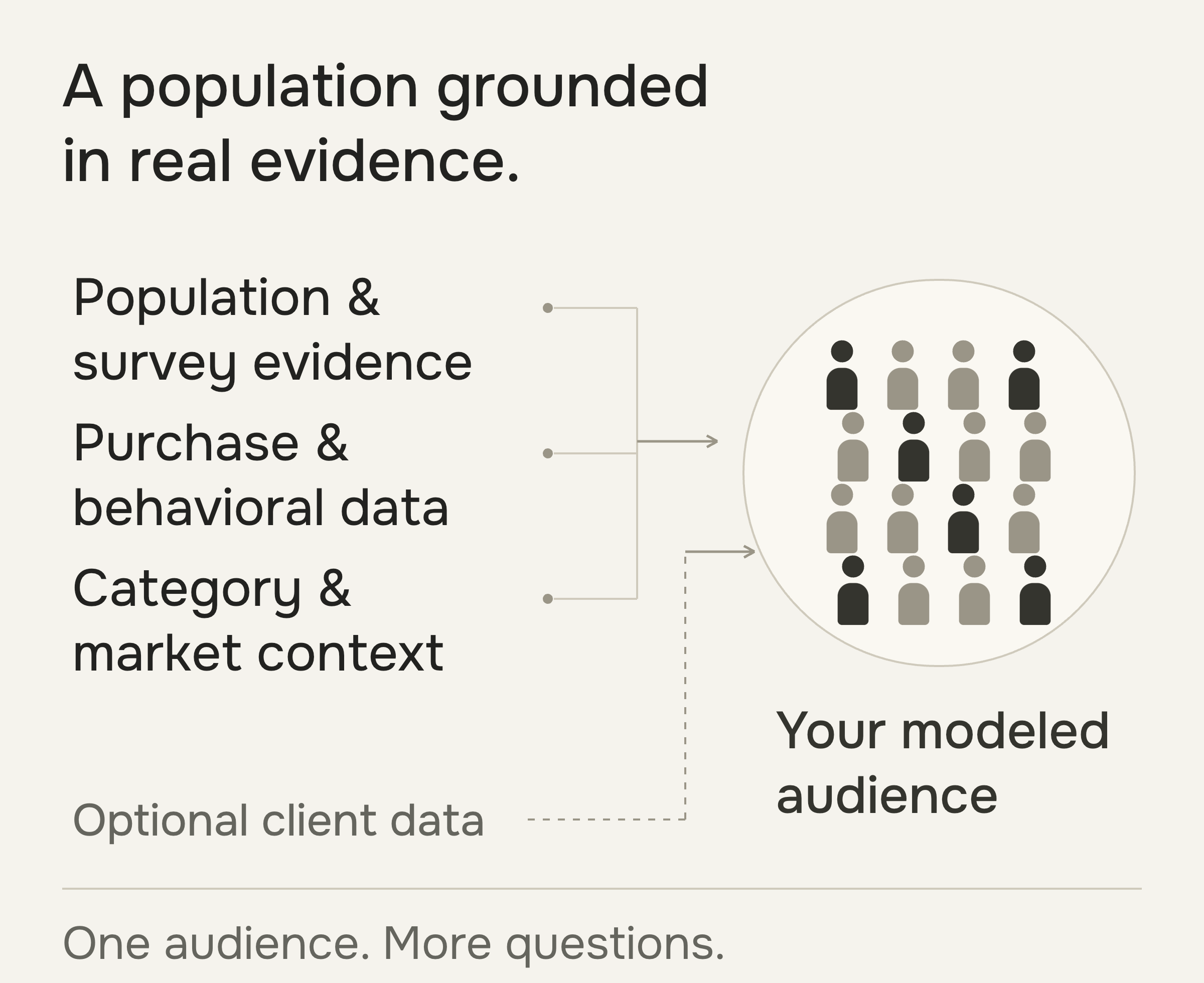
Sapien grounds its populations in real-world population, purchase, behavioral, factual survey, category, review, and contextual evidence. Source: Sapien.
A product decision, followed through
Who would buy a $1,999 foldable iPhone, and what would make everyone else pass? Sapien’s study of 10,000 modeled smartphone-buyer profiles follows that decision through audience differences, purchase reasons, price comparisons and substitution from other iPhones.
The case study reports its two coverage cohorts separately and distinguishes the main offer from the matched price experiment. It shows how the findings inform a premium-product or broader-adoption strategy; it is a modeled scenario study, not a forecast of launch sales.
Explore the foldable iPhone research
Pricing: Sapien offers per-report, volume-discounted, and unlimited annual research plans. Contact Sapien for a quote covering population setup, study scope, reporting, and included follow-ups.
Best fit: Teams that want a complete research partner for audience understanding, testing, segmentation and prediction, with results and recommendations they can use in the decision.
Multinational fieldwork and ongoing consumer communities
2. Ipsos: Best for complex, custom, multi-market research
Provider type: Full-service global market research and consulting firm.
A study in several countries is also a coordination job. Ipsos puts local fieldwork, quantitative testing, qualitative interpretation and recommendations under one lead.
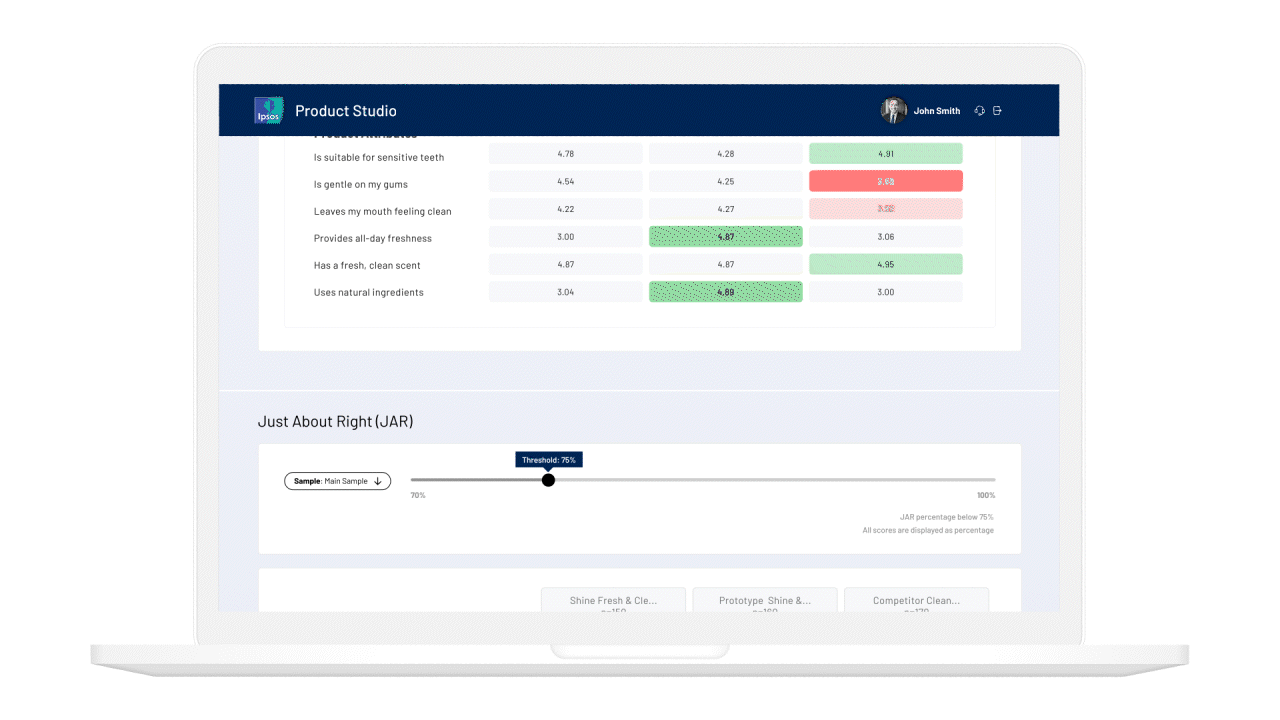
Ipsos Product Studio turns product evaluations into comparable attribute and Just About Right diagnostics. Source: Ipsos.
Shortlist Ipsos when the brief needs a bespoke combination of methods and markets. Compare Kantar when brand, creative, or innovation benchmarks are central. Both offer broad custom research; a relevant deliverable from the proposed team will help resolve a close choice.
Pricing: Custom. Compare the assigned team, markets, research methods, and decision support included.
3. Kantar: Best for brand, creative, innovation, and global qualitative research
Provider type: Global insights, data, and consulting company with both full-service and standardized products.
Kantar combines brand, advertising, innovation, media and shopper research. Its qualitative practice and local-market teams let a project draw on several methods.
Kantar Marketplace provides standardized studies; Converser runs AI-moderated interviews; Kantar Live supports group discussions at scale. The right service depends on whether you need a repeatable creative test or an exploratory study across markets.
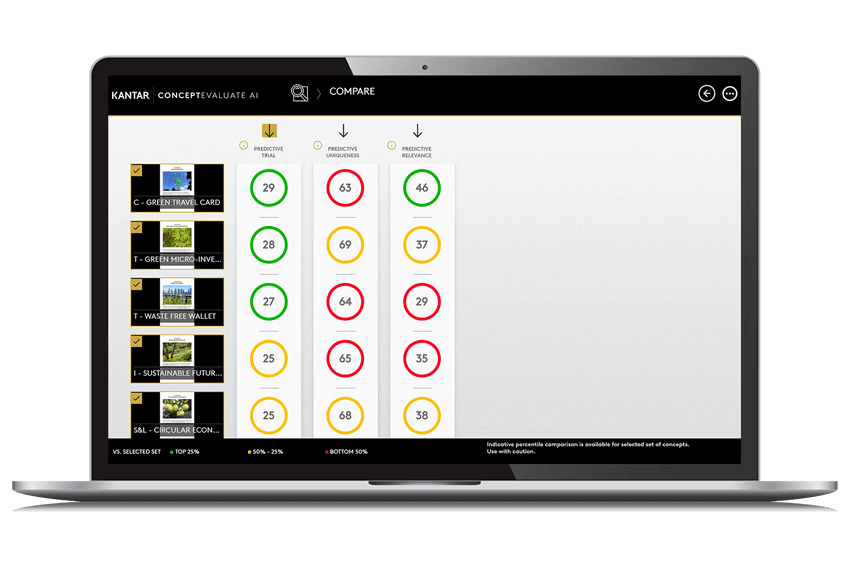
Kantar ConceptEvaluate AI compares concepts across predictive trial, uniqueness and relevance. Source: Kantar.
Best fit: Global companies linking research to brand, advertising, innovation, or activation decisions.
Pricing: Marketplace offers pay-as-you-go and prepaid options through sales. Custom research is quoted by scope, markets, sample, and consulting support.
4. Human8: Best for insight communities and repeated co-creation
Provider type: Global insight consultancy specializing in managed communities and consumer collaboration.
A continuing community lets each study build on the last. Human8 runs communities from one- or two-week sprints to multi-year programs, for discovery, co-creation, validation and putting findings to work inside the business.
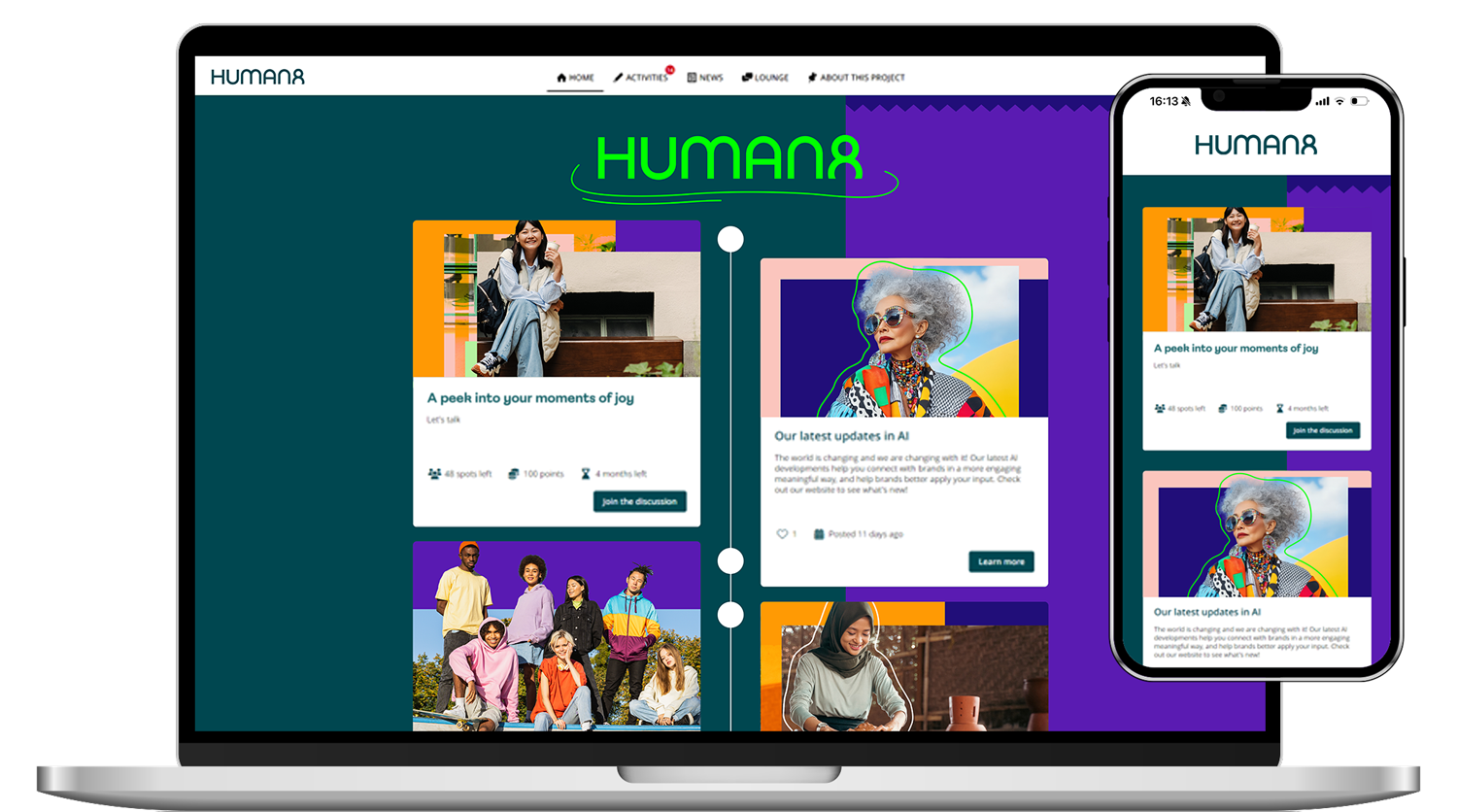
Human8’s community platform brings participant activities and discussions into one workspace across desktop and mobile. Source: Human8.
Best fit: Teams that want ongoing feedback from the same customers as they develop products, refine ideas, and respond to changing needs.
Pricing: Custom. Community size, duration, study cadence, and analysis support determine the scope; confirm any digital-twin component separately.
Con: A community provides depth and continuity, but its members do not automatically represent the wider market.
For a closer look at what each provider handles, see the market research services guide.
Retail and shopper research: establish what actually sold
5. NIQ: Best for retail sales, share, price, distribution, and promotion
Provider type: Retail measurement and consumer-intelligence data company.
NIQ Retail Measurement Services tracks sales, share, price, distribution, velocity, and promotion. Start here when a debate about the brand needs a firmer account of the market. A sales decline concentrated in lost distribution calls for a different response from one happening across well-stocked stores.
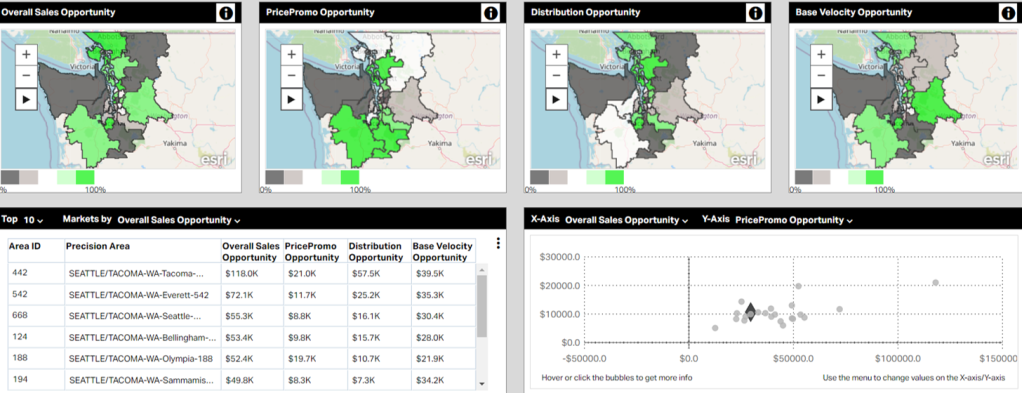
NIQ’s Precision Areas dashboard links observed store sales, local demographics, and geographic data to surface sales, promotion, distribution, and velocity opportunities. Source: NIQ.
Best fit: CPG, retail, category, sales, and revenue teams that need a consistent view of market performance.
Pricing: Custom. Confirm category, retailer, channel, and geographic coverage, plus the history and data access included.
Con: Retail measurement and new-product research are different scopes. NIQ's BASES idea, concept, and claims testing is a separate route; confirm which product, sample, and consulting are included.
6. Circana: Best for connecting market performance with shopper behavior
Provider type: Market-measurement and consumer-behavior data company.
Circana Complete Consumer connects verified purchases, shopper panels and surveys to explain who drove a change in sales. Use it to examine how many households buy, whether they return, and where they shop instead.
Compare NIQ and Circana using the same categories, retailers, channels, and dates. Then ask how each product connects a change in sales to household buying behavior. If you want to ask verified buyers why they bought, compare whom Numerator can reach and the follow-up research it offers.
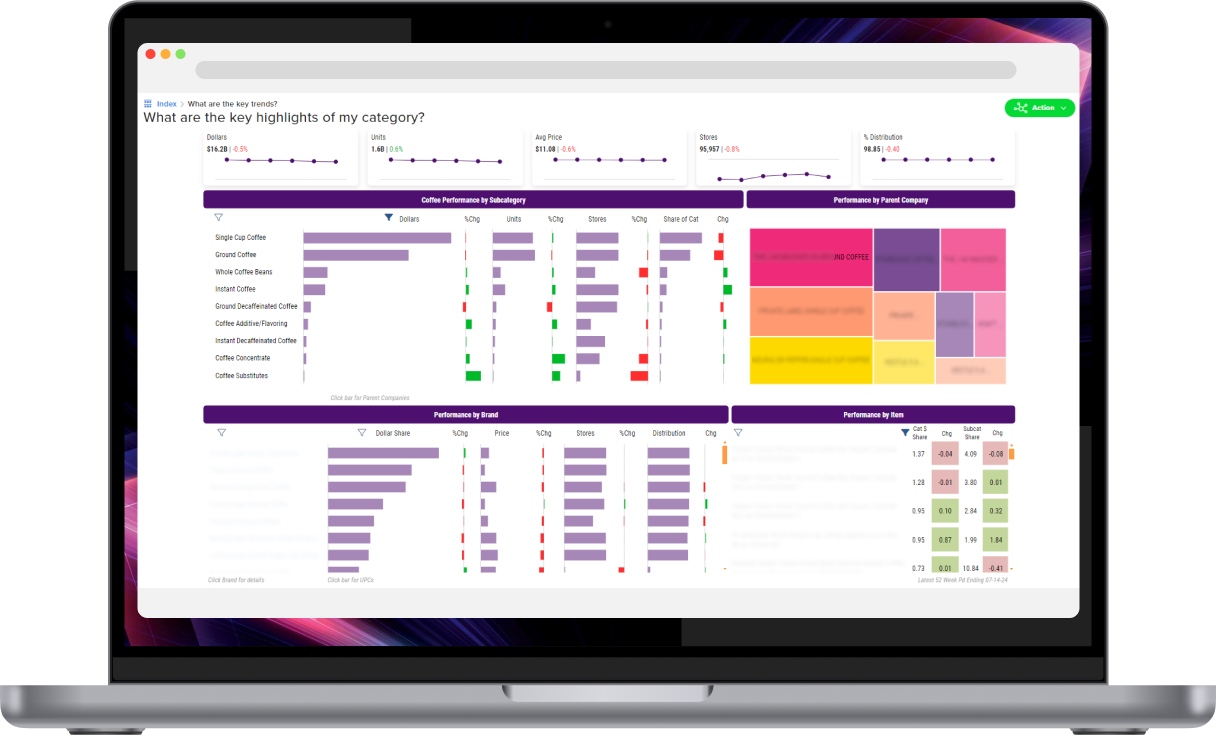
Circana’s Liquid Data Go dashboard combines sales, units, price, stores, distribution, brand, and item performance in one category view. Source: Circana.
Best fit: Retail, CPG, marketing, and category teams investigating who drove a performance change and why.
Pricing: Contact sales. Confirm the markets, datasets and historical coverage included, how often the data updates, and the user access, exports and support your team receives.
Con: Circana’s measurement subscriptions track past sales and shopper behavior. Its separate Concept Testing product covers product ideas, packaging, pricing and claims.
7. Numerator: Best for receipt-linked household purchase behavior
Provider type: Consumer panel, purchase-data, and shopper-insights company.
A receipt records a purchase. Numerator connects that record to the household behind it. OmniPanel combines receipts and linked accounts with surveys and profiles, showing repeat buying, basket contents and shopping across retailers. Purchase-linked follow-up research adds the buyer’s explanation.
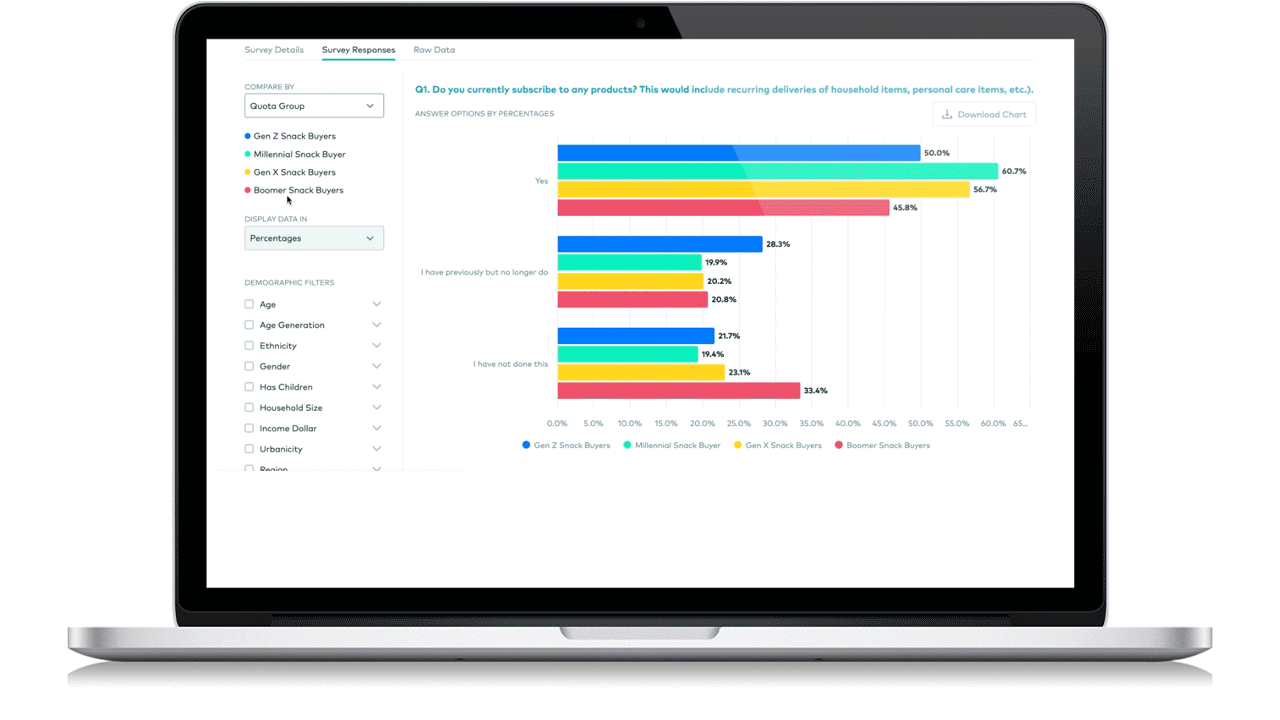
Numerator’s Smart Reporting workspace compares survey responses across purchase-linked audience segments. Source: Numerator.
Best fit: Brands and retailers that need to connect purchase behavior to household attributes and reported motivations.
Pricing: Custom. Confirm market and category coverage, usable sample sizes, and the cost of purchase-linked follow-up research.
Con: Numerator’s available households, purchase history and targeting options differ by research product.
Market intelligence: find the right market and opportunity
8. Euromonitor International: Best for market sizing and cross-country context
Provider type: Syndicated market-intelligence and research company.
Euromonitor Passport helps teams decide which markets deserve attention. It combines industry, country, consumer, company, and channel data with forecasts and analyst research. That context helps a team distinguish a large category from an attractive entry opportunity.
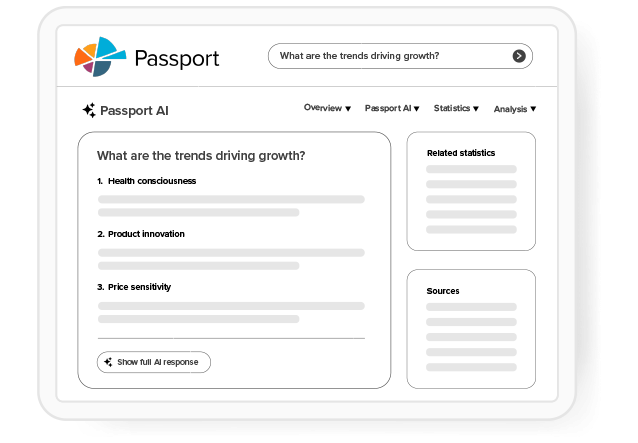
Passport AI lets users ask questions about Euromonitor’s structured market and category data and see related statistics and sources. Source: Euromonitor.
Start with Euromonitor when the decision is which category or country to enter. Compare Mintel when the immediate task is understanding consumer trends and the products already competing for attention.
Pricing: Individual reports are available; Passport and consulting are custom-priced. Compare country and category coverage, analyst access, and data rights.
Con: Syndicated intelligence frames an opportunity. It does not answer a proprietary concept, message, price, or product question.
9. Mintel: Best for consumer-category intelligence and product trends
Provider type: Consumer market-intelligence, research, and consulting company.
Mintel is useful when an innovation team needs to know how new its idea really is. Analyst-led consumer reports and product databases put the proposition beside existing launches, category activity, and consumer trends. Use that context to sharpen the question before commissioning a bespoke test.
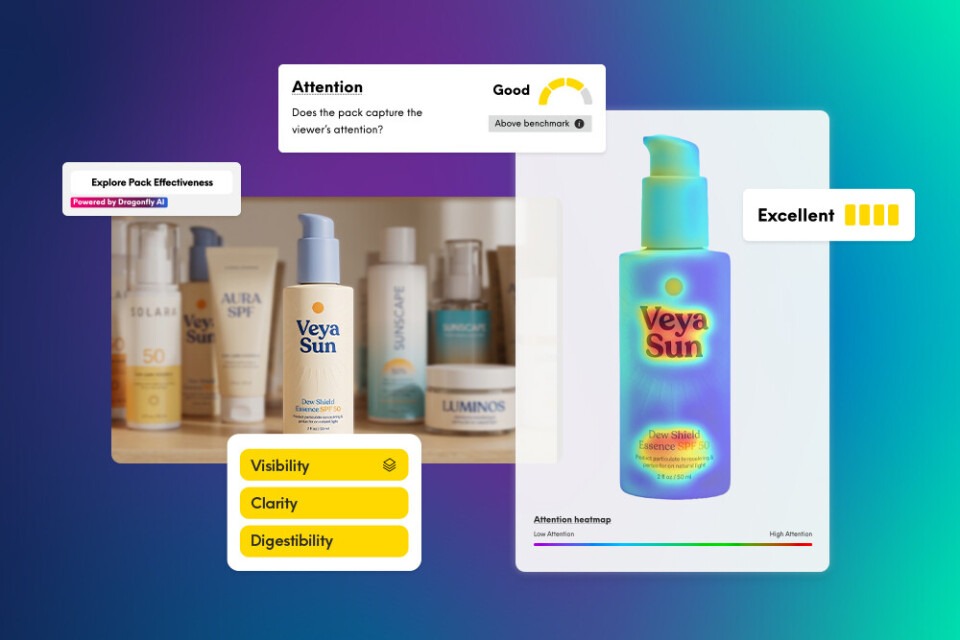
Mintel’s Dragonfly analysis shows how packaging elements can be evaluated for likely visual attention. Source: Mintel.
Best fit: Brand, innovation, strategy, and agency teams building category context and tracking product activity.
Pricing: Individual reports and subscriptions are available. Confirm the markets, report libraries, product databases, and analyst access included.
Con: Category reports cover existing market evidence. Testing your own product, message or price requires a separate study.
10. AlphaSense: Best for B2B company, industry, and financial intelligence
Provider type: Enterprise market-intelligence platform with expert research and call services.
AlphaSense searches filings, broker research, news, expert transcripts, and internal sources for competitive intelligence, diligence, and strategy. Through Tegus Expert Call Services, teams can also commission new interviews with sourced experts. Its Voice of Customer research includes interviews with users of B2B technology products.
Use AlphaSense's library when relevant evidence already exists, or commission an expert call to investigate a gap. For a new survey or interview program with a precisely defined professional audience, also consider NewtonX's custom B2B research.
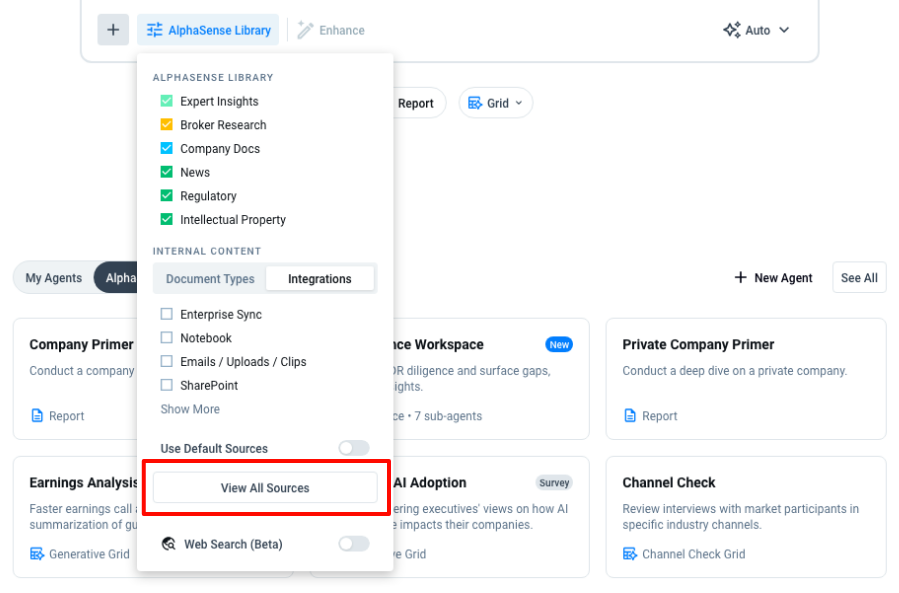
AlphaSense combines premium business sources, monitoring, and source-linked synthesis in one research workspace. Source: AlphaSense.
Best fit: Corporate strategy, competitive intelligence, investment, and B2B research teams.
Pricing: Custom. Compare licensed content and user access, with commissioned expert calls scoped separately.
Con: Expert calls provide specialist perspectives; representative consumer studies require a different design. Commissioned interviews are scoped separately from search access.
11. IQVIA: Best for healthcare and life-sciences intelligence
Provider type: Healthcare data, technology, analytics, and research-services company.
IQVIA Primary Intelligence combines custom and syndicated research with healthcare data and specialist analysis. Its studies cover questions such as patient needs, product positioning and brand performance. The wider business also provides real-world data, analytics and technology for life-sciences teams.
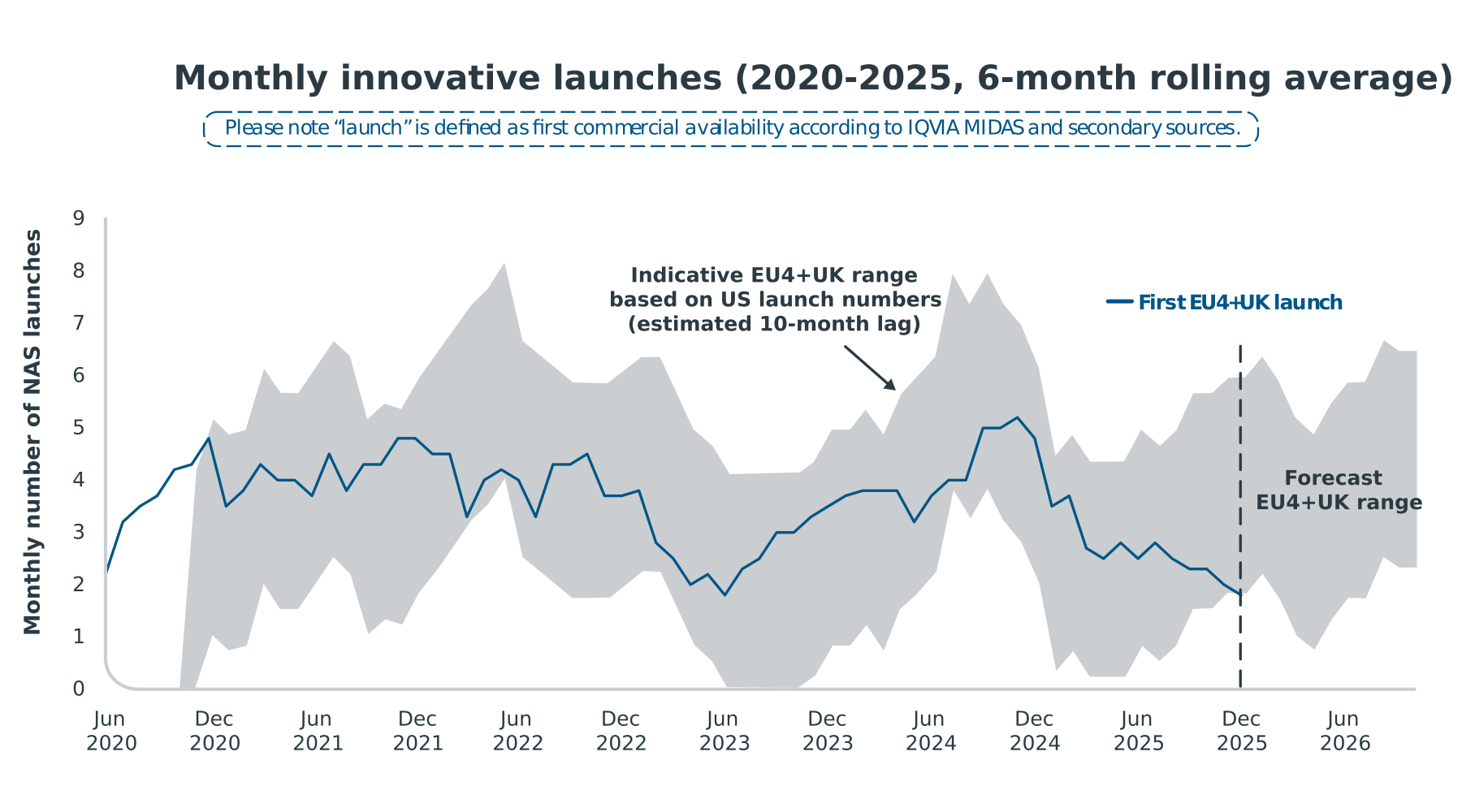
IQVIA combines historical life-sciences market evidence with forward-looking launch analysis. Source: IQVIA.
Best fit: Pharmaceutical, biotech, medtech, and healthcare teams that require specialist populations, datasets, governance, and market knowledge.
Pricing: Custom. Therapeutic area, countries, audience, datasets, and the research-service scope determine the engagement.
12. GWI: Best for audience profiles and survey-grounded exploration
Provider type: Syndicated global consumer-data and audience-intelligence platform.
GWI helps teams get past a broad audience label and examine the people inside it. Its recurring surveys cover attitudes, behavior, media use and brands. Audience builders, cross-tabs, charts and exports support sizing, comparison and media planning.
GWI's Synthetic Audiences adds personas and multi-segment focus groups in Agent Spark, grounded in the company's existing survey data.
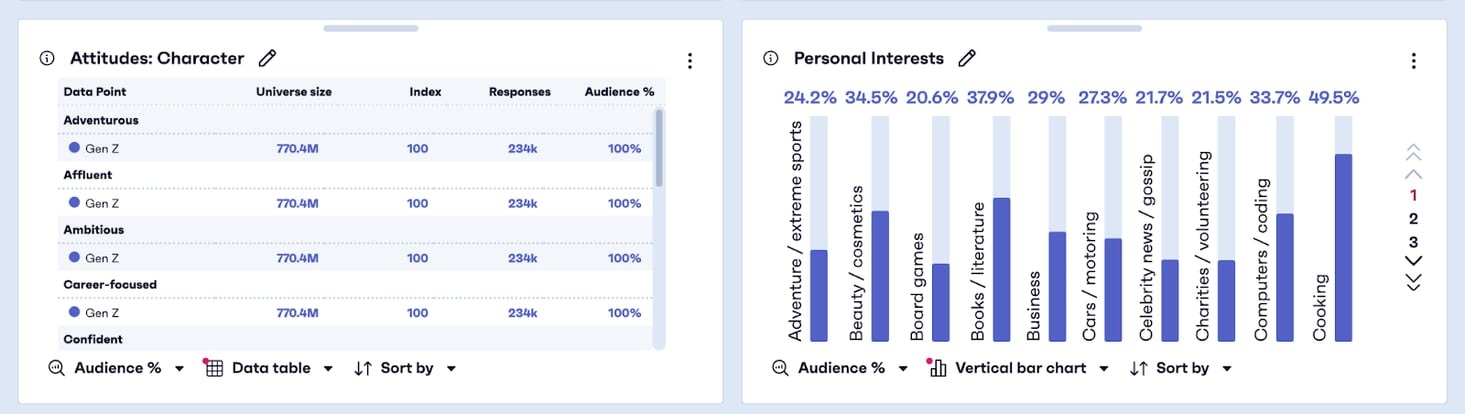
GWI’s audience tools let users build and compare segments from syndicated survey data; Agent Spark lets them explore synthetic responses grounded in that research. Source: GWI.
Best fit: Agencies, media teams, and brands that repeatedly need comparable evidence for audience planning and activation.
Pricing: The free plan includes 10 Agent Spark prompts per month. Plus is $150 per user monthly or $1,500 annually. Confirm Synthetic Audiences access and limits for the chosen plan.
Con: Audience profiles cover the markets and variables in the selected dataset. Custom research addresses questions outside that coverage.
For a deeper comparison of these evidence bases, see the consumer insights companies guide.
Specialists: solve a specific research challenge
13. SKIM: Best for pricing and structured product or portfolio trade-offs
Provider type: Research consultancy specializing in pricing, revenue management, and choice modeling.
SKIM designs choice-based, adaptive, menu-based, and preference-based conjoint studies. Controlled choices estimate the value of attributes and model how preference shifts among offers, rather than asking respondents to rate every element separately.
A new product can look attractive while taking most of its buyers from something you already sell. That is why pricing and portfolio work needs the competitive set and substitution patterns, not just an isolated preference score. SKIM's choice-modeling specialization is relevant to that problem.
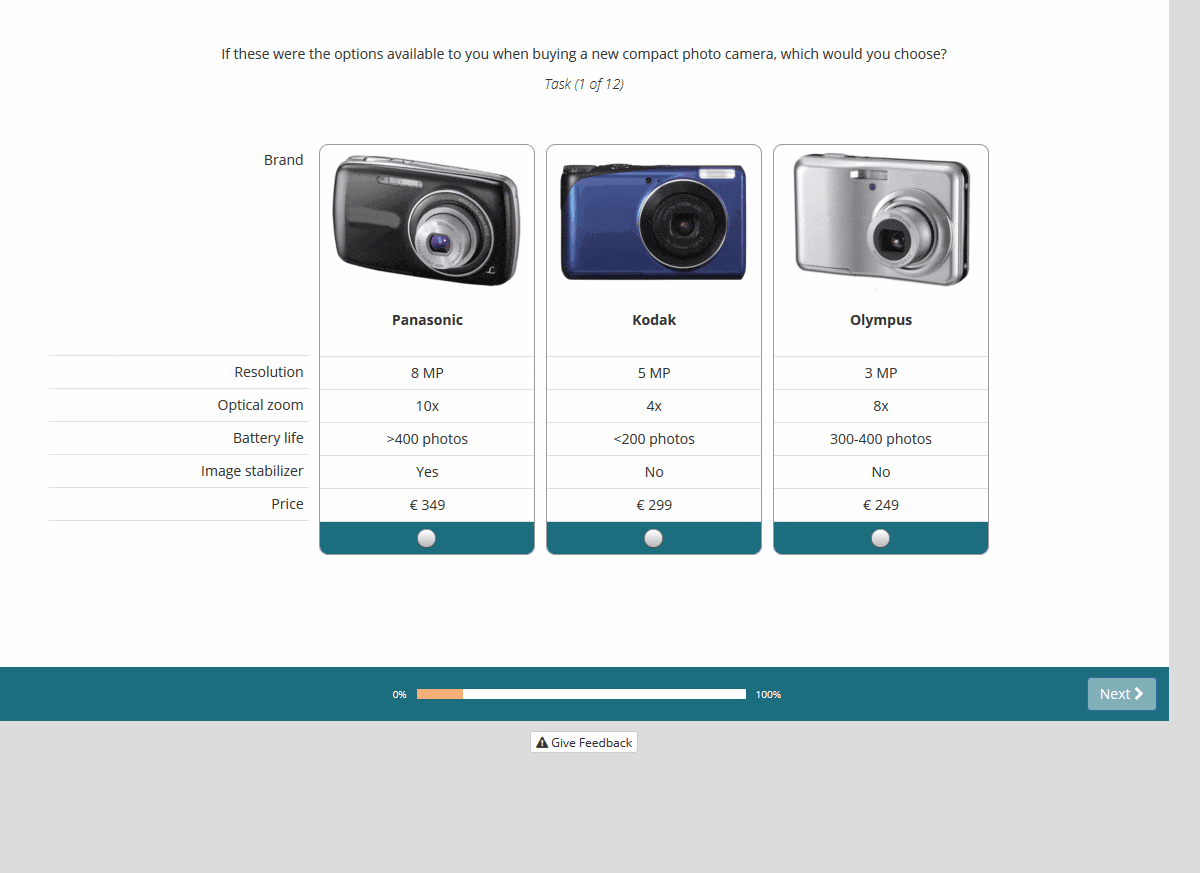
SKIM uses structured choice designs and simulators to estimate how price, feature, and portfolio changes redistribute preference. Source: SKIM.
Best fit: Pricing, product, and revenue decisions where choice structure and trade-offs must be modeled carefully.
Pricing: Custom. Study design, audience, markets, and the simulator and implementation support determine the fee.
Con: Conjoint estimates preference within a designed choice task. It does not measure completed purchases.
14. Sago: Best for participant recruitment, facilities, and fieldwork operations
Provider type: Fieldwork, participant-recruitment, facilities, and research-operations company.
Sago helps researchers get the right people into the study. It provides recruitment, facilities, and fieldwork across consumer, B2B, healthcare, and technology audiences. Start here when your team has the research plan and needs help running it.

Sago’s New York viewing room shows the controlled space, observation, and recording infrastructure behind facility-based qualitative work. Source: Sago.
Best fit: Research agencies and internal teams that need verified participants, specialist audiences, facilities, scheduling, or multi-market operations.
Pricing: Custom. Participant eligibility, recruitment difficulty, incentives, and facility needs shape the quote. Confirm replacement terms.
Con: Study design, analysis and recommendations sit outside a fieldwork-only engagement.
Research platforms: build a capability you can use repeatedly
15. Qualtrics: Best for enterprise survey programs and flexible panel workflows
Provider type: Enterprise experience-management and research software platform with panel and services options.
A team that runs research every month needs a process it can repeat. Qualtrics brings concept testing, conjoint, MaxDiff, market studies, video and audio feedback, analysis, and dashboards into its Strategic Research platform. That gives teams a shared way to work across studies.
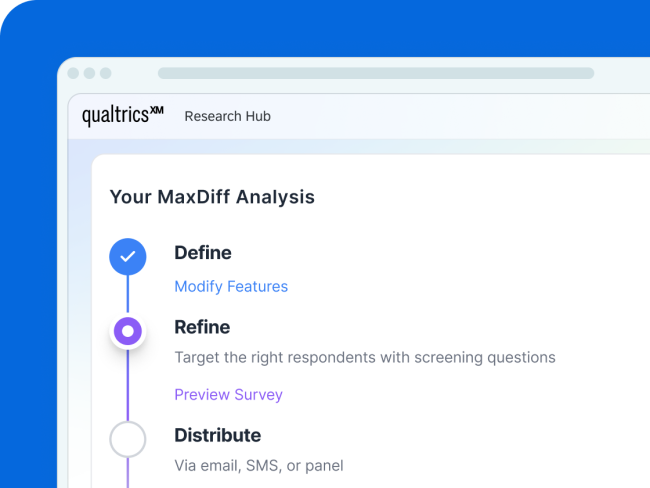
Qualtrics brings survey design, advanced methods, panel access, analysis, and reporting into a shared research workflow. Source: Qualtrics.
Start with Qualtrics for shared research infrastructure across teams. Compare quantilope when the recurring work centers on advanced quantitative studies and trackers. Give both the same proposed study and compare setup, analysis and the methods included in the quote.
Pricing: Self-service is $420 per month, billed as $5,040 annually, for 1,000 responses shared across users. Enterprise pricing is custom; Edge Audiences uses separate credits.
16. quantilope: Best for automated advanced methods and recurring trackers
Provider type: Automated quantitative consumer-intelligence platform with self-service and managed options.
quantilope makes recurring quantitative studies easier to run as a program. It standardizes concept, claims, packaging, pricing, segmentation, portfolio, shelf, advertising, brand and launch studies. The Quinn copilot and optional research services support the work.
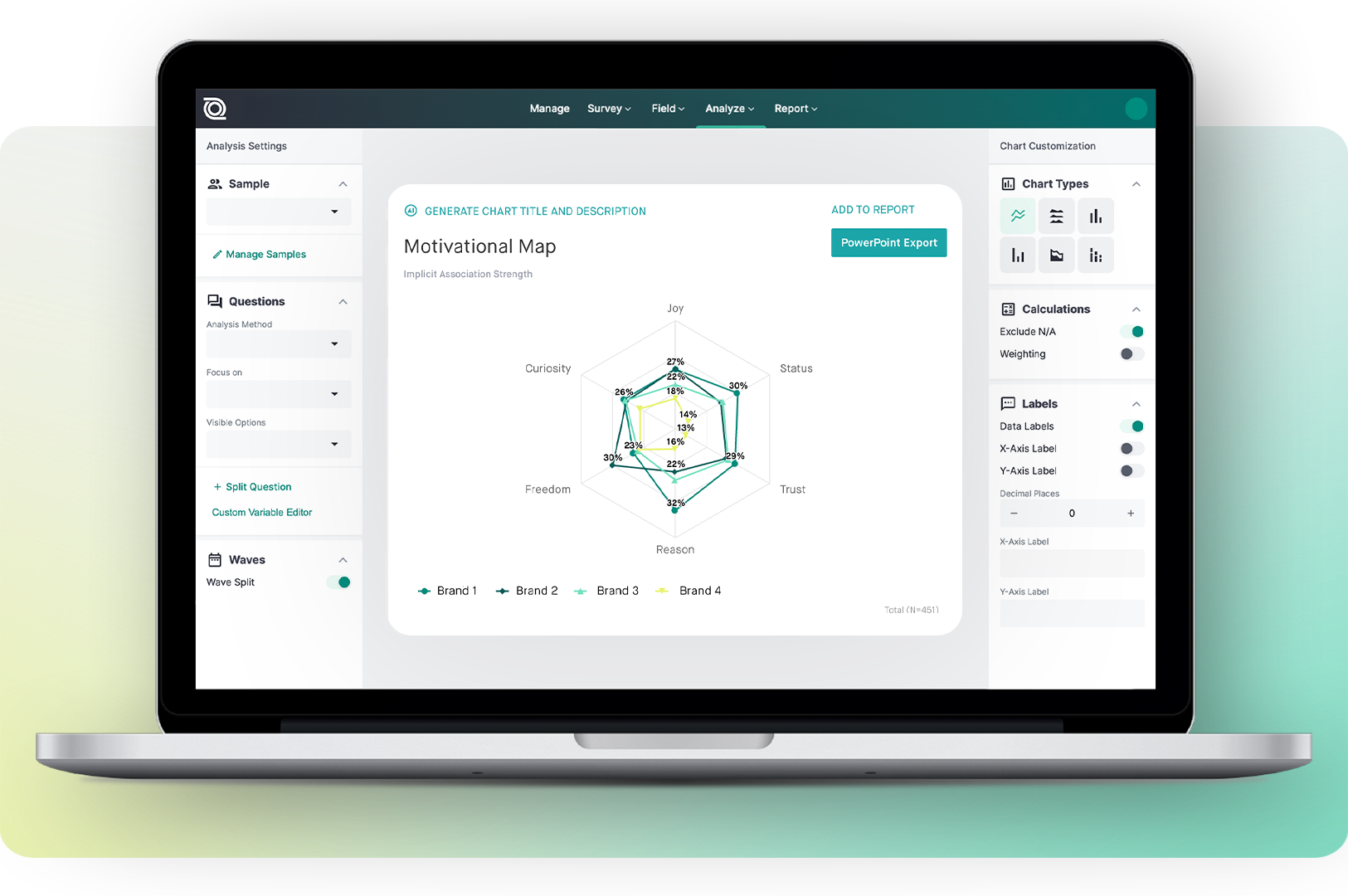
quantilope’s CI Advanced workspace combines method setup, chart controls, and export-ready analysis. Source: quantilope.
Best fit: Internal insight teams with enough recurring quantitative work to benefit from automation and shared standards.
Pricing: Business starts at $2,000 per month for three users. Compare panel and research-service costs alongside the license.
Con: Conjoint and segmentation require Enterprise, so the advertised Business price does not cover those methods.
17. Outset: Best for AI-moderated interviews with real people
Provider type: AI-moderated qualitative research platform with recruitment and service options.
Outset conducts adaptive text, voice, or video interviews with real participants. Researchers import or build a guide, define the stimuli and probing logic, recruit through a panel or owned audience, and receive transcripts, themes, clips, and synthesis.
Outset lets a small research team run many interviews at once while retaining control of the guide. Review how the moderator follows an unclear answer, then trace the resulting theme back to the interview.
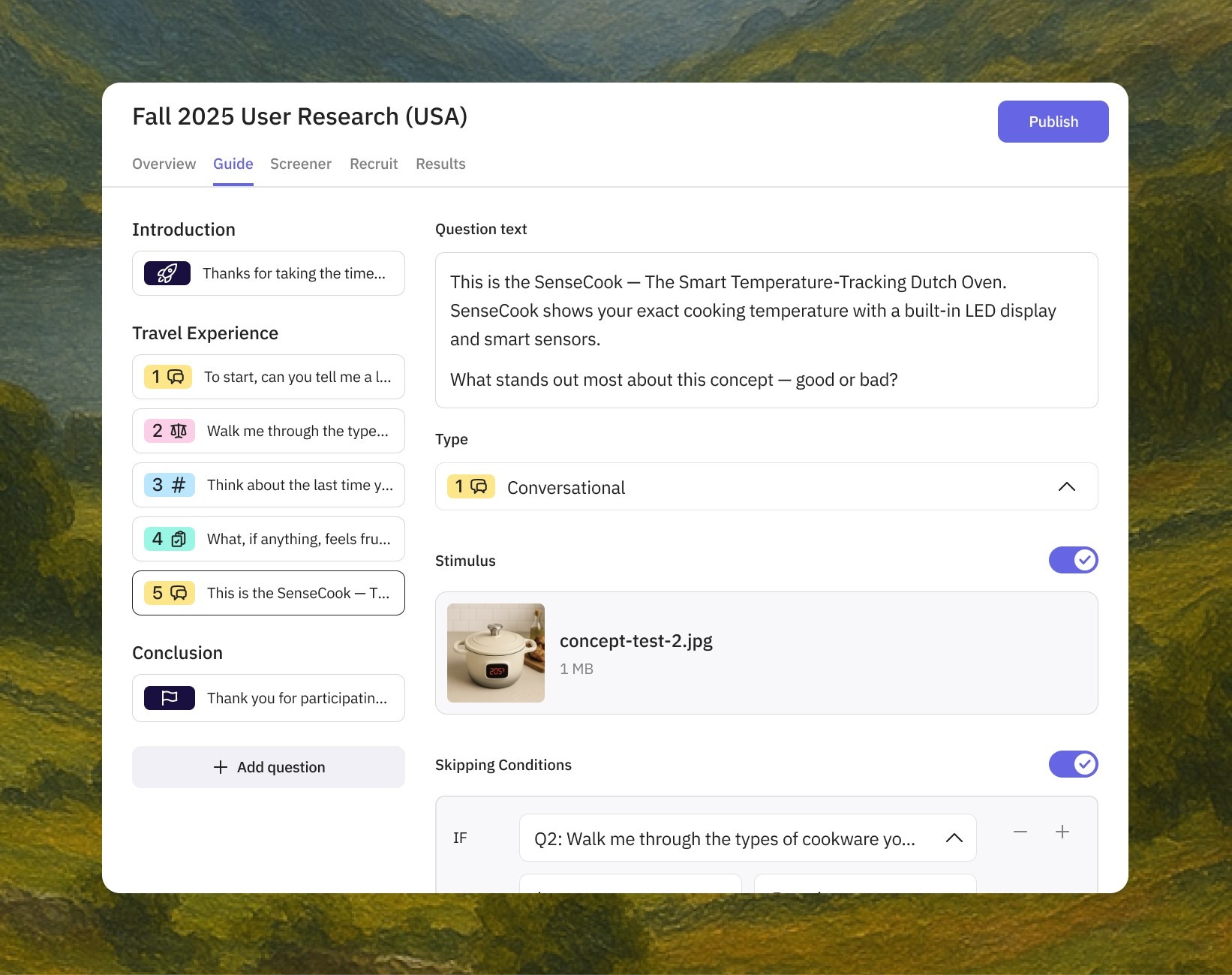
Outset’s guide editor shows how a researcher defines questions, probes, logic, and stimuli before the AI moderator conducts interviews. Source: Outset.
Best fit: Product, customer, brand, and insight teams that want to hear directly from more participants while retaining control of the interview guide.
Pricing: Custom. Compare the audience, interview volume, languages, and research support included.
For more interview and focus-group providers, see best qualitative research companies. For a software-first comparison, see best AI market research tools.
Narrow your shortlist with our guides to market research services and deliverables, qualitative research companies, consumer insights companies and AI market research tools.
Choose the partner for your next decision
Bring Sapien the product, campaign, pricing or customer question holding up your team. Sapien builds the audience, runs the study and delivers a recommendation with the quantitative results and qualitative explanation behind it. The same population remains available as the decision develops. For a new market entry, licensed category data can add context; physical product testing can establish how a product performs in use.