
Concept Testing: What It Is, Methods and Examples
Concept testing compares reactions to an idea before launch. Learn the methods, questions, cost drivers and examples that help you decide what to develop.
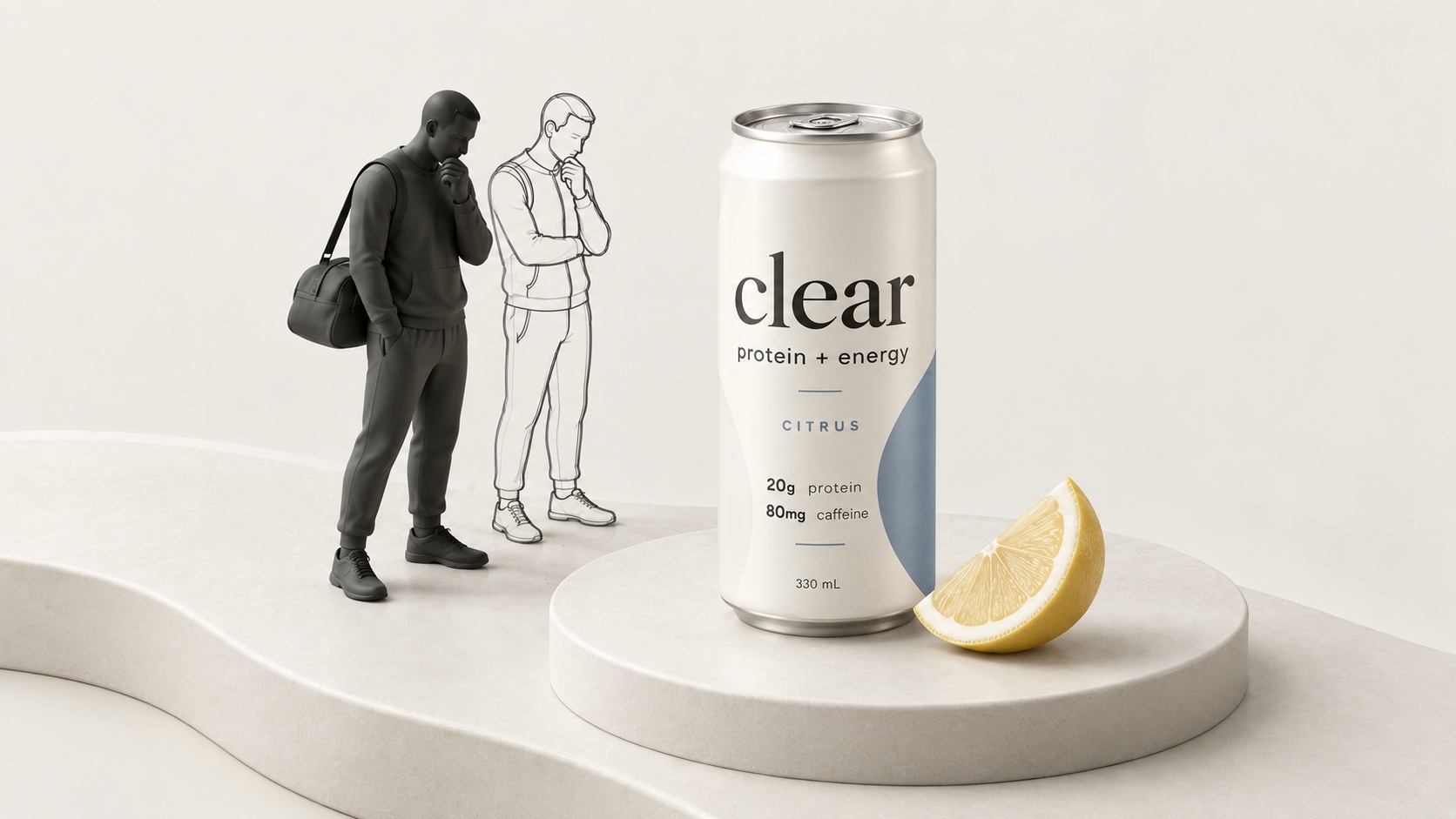
Concept testing compares reactions to a product, service or campaign idea so you can decide which concept to advance, change or stop. Advance a clear, useful offer to its next test, change an offer with a fixable problem, and stop a route when evidence from the intended buyers shows that its essential benefit doesn't meet the rule you agreed before testing.
The concept gate memo below records the assumptions, thresholds and evidence that would reverse each call. Simulated audiences can help shortlist ideas and explore objections; real product trials and purchase evidence are needed before a launch decision.
Example: Clear Protein’s first trial audience
This Sapien study tested an unofficial hypothetical concept with 2,000 simulated U.S. adults. Red Bull did not commission it.
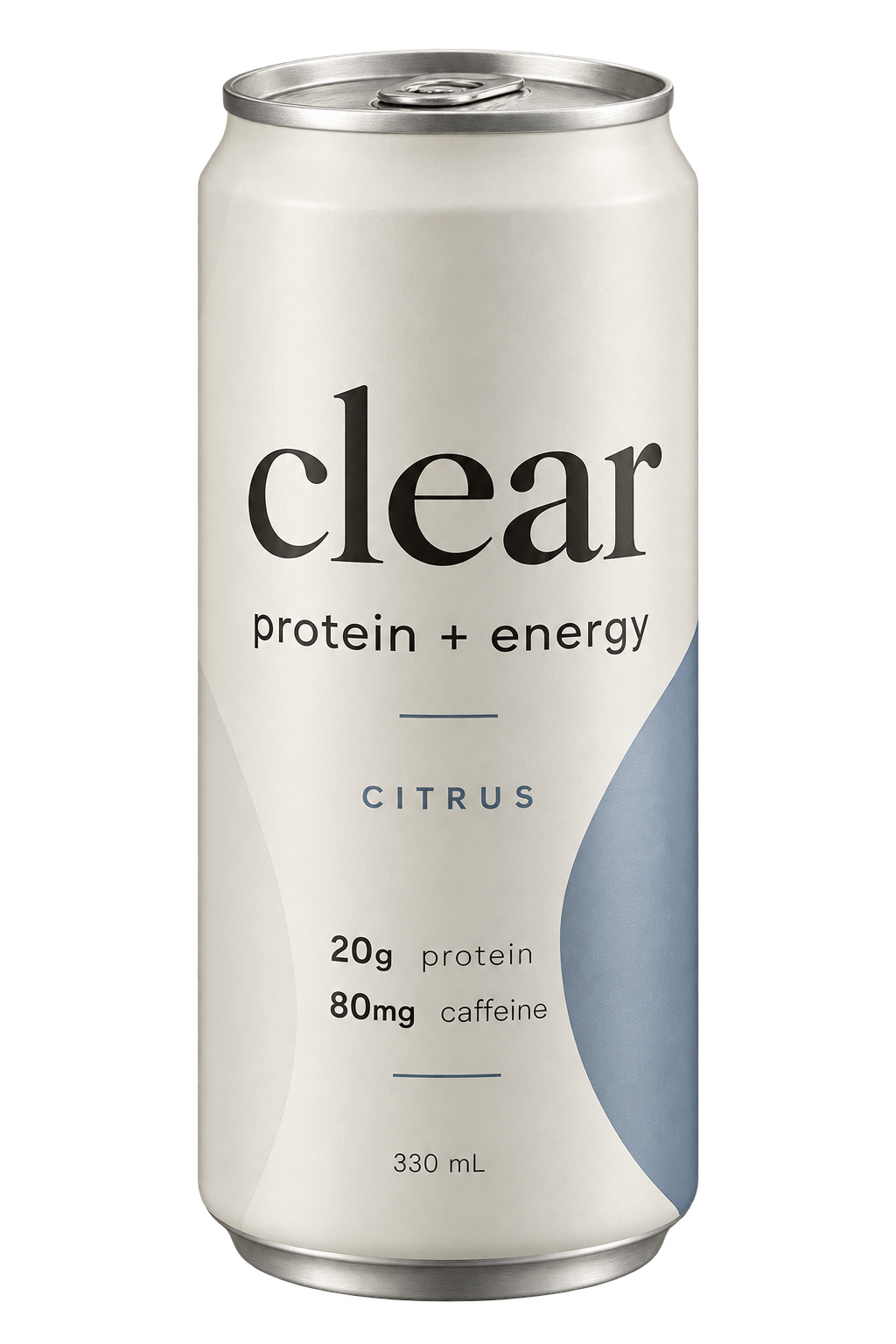
The offer
330 mL clear citrus drink. Protein + caffeine in one can: 20 g protein, 80 mg caffeine and $3.99 per can.
The simulated audience’s response
Audience | Modeled first purchase / Modeled regular purchase |
|---|---|
Regular protein users | Modeled first purchase: 31.1% Modeled regular purchase: 5.2% |
No regular protein habit | Modeled first purchase: 21.5% Modeled regular purchase: 2.9% |
First purchase: buy at full price within eight weeks. Regular buying: at least four cans in weeks 5–8 after first purchase, across two shopping trips.
These percentages describe protein-habit groups within the 2,000-person simulated study. The number of responses in each subgroup was not supplied. The figures are simulated results, not observed sales. Our comparisons with human research show why validation needs to match the particular task and audience.
What to do next
Start the paid product test with regular protein users. Measure trial, repeat buying and what the drink replaces.
Before production, measure observed repeat purchases and check whether the margin is viable.
The protein study helps choose who should try the drink first. The production decision stays open. Use your own study to choose an offer, audience or objection to work on before spending more.
Book a demo to scope your concept comparison. Use the discussion to choose the offers and buyer groups for the next product trial, and the human evidence that would change that plan.
Give the audience a description, image or prototype it can react to. Look at what the responses say the offer is, where it fits and what it might replace. Use that to improve the idea. Our concept testing examples show how this works across product, service and message tests.
What decision should the test help you make?
You may be choosing a prototype, an offer to launch or the first audience to try it. Write the decision in one sentence: “We need to choose the offer and audience for our next product trial.” Build the concepts, questions and report around it.
A test can lead to four actions: develop an idea, revise it, try another audience or stop. Agree the reasons for each before seeing the results. A prototype may need a clear benefit, plausible use and a way to address the main objection. A national launch also needs evidence about actual buying, repeat use and financial viability.
If no plausible finding would change your plan, the study needs a different question.
The gate belongs to the next investment
Prototype readiness and launch readiness are separate gates. Name the next investment before setting the pass rule. Otherwise, a promising concept score can become permission for a much larger commitment than the study tested.
Copy the memo for each concept and each buyer group whose result could change the decision. Fill in the thresholds before seeing the answers.
Concept gate memo
Concept, version and complete offer:
Intended buyers, buying situation and current alternative:
Next investment under review:
Essential assumptions, including the hardest one to reverse:

Advance rule:
  Required result, measure, units and answering base:
  Minimum useful difference or acceptable downside:
  Uncertainty rule and important buyer groups that must pass:
Change rule:
  Which fixable misunderstanding, offer detail or objection triggers a revision:
  What stays fixed in the retest:
Stop rule:
  Which supported finding would make the essential benefit or economics fail:
  Which result is inconclusive and pauses the decision instead:

Evidence record:
  Actual result and source; human, simulated or not yet collected:
  Materials shown, valid bases, missing answers and study dates:
  Important disagreement or uncovered buyer group:
Call: advance / change / stop / pause for missing evidence
Reason, owner and decision date:
Reversal rule: new evidence that would change this call:
Human evidence required before the next larger investment:
“Pause” keeps an unanswered question separate from a failed concept. If a decision-critical group is missing or the uncertainty spans the threshold, the memo needs more evidence rather than a manufactured winner.
Clear Protein: choosing the first human trial audience
The Clear Protein study above concerns an unofficial Red Bull protein-and-caffeine drink concept for U.S. adults. The next decision is which audience to investigate in a real product trial, not whether to launch the drink. Its simulated comparison points to regular protein users as the first trial audience; the subgroup response counts weren't supplied, so the percentages don't show how uncertain that comparison is.
For the next stage, use these illustrative planning rules. They weren't thresholds in the published simulation, and the human outcome cells are still uncollected.
Memo field | Worked entry |
|---|---|
Next investment | Design a limited product trial with regular protein users. Keep production approval outside this gate. |
Assumptions to check | Buyers understand the protein-and-caffeine offer; the actual drink works for their routine; repeat purchases support the economics. |
Evidence record | Simulated, 2,000 U.S. adults: first purchase 31.1% among regular protein users versus 21.5% with no regular protein habit; regular buying 5.2% versus 2.9%; subgroup bases not supplied. |
Advance to trial execution | The real product is ready for the intended trial, and at least 80% of valid unaided answers (one per eligible regular protein user in the concept-check group) correctly explain the offer. Agree the answer key, sample plan and uncertainty rule before fieldwork. The 80% is a planning input for this exercise, not a benchmark. |
Change | Fewer than 80% on that same valid-answer base correctly explain the offer because of a fixable misunderstanding or offer detail. Revise that detail, keep the other conditions matched and retest comprehension. If uncertainty leaves the agreed threshold unresolved, pause for more evidence instead. |
Stop this route | A suitable test with the intended buyers shows the essential benefit isn't useful, or the actual costs make the offer unworkable. Record the evidence; missing results alone don't meet this rule. |
Current call | Advance the audience hypothesis to trial planning. Trial execution remains conditional on the product-readiness and human-comprehension checks. Production remains unapproved. |
Reversal rule | Reopen the audience choice if a matched human comparison shows that the benefit is understood and useful among non-regular protein users but misses the agreed gate among regular users. Revise or stop the offer if its essential benefit or actual economics fails the agreed rule. |
Evidence for a later launch gate | Observed full-price trial and repeat buying, what the drink replaces, the physical experience and actual contribution margin. Set the required repeat-buying and margin levels from the business case before the trial. |
The useful result is a smaller next commitment with a named reason to reverse it. A simulated preference doesn't fill any of the missing product-trial records.
View an example study to see the audience, offer and findings before planning your own.
Show an offer buyers can understand
Show enough detail for someone to imagine choosing and using the offer: the problem or occasion, benefit, how it works, what is included and where it is bought. Show a realistic price when the choice depends on value at that price. Leaving price open is useful for early benefit research, but answers a different question.
If the question is what to charge for a defined offer, choose the pricing study for that decision. Keep the offer and buying situation fixed when comparing prices.
The protein drink’s ingredients, can size and price make it concrete. For a service, state what customers receive, how they access it, the cost and important terms. “Make life easier” gives someone too little to judge.
Match the amount of detail and visual finish across concepts. A polished pack versus a rough sentence also tests presentation. Say which differences you want to compare. A complete offer can vary in benefit, format and occasion together. Our claims testing guide explains how to compare one statement while keeping the offer fixed. For an artwork choice, our packaging design testing guide covers shelf and listing contexts.
Example: desk or commuting tea bottles
In this hypothetical example, a team is choosing reusable tea bottles for desk workers and commuters. It keeps price and capacity the same while changing the benefit, occasion and lid.
Offer detail | A / Desk Brew; B / Travel Brew |
|---|---|
Price | A / Desk Brew: $25 B / Travel Brew: $25 |
Benefit | A / Desk Brew: Easy to clean. Ready for your desk. B / Travel Brew: Built for the journey. Tea on your commute. |
Occasion | A / Desk Brew: Tea beside your workspace. B / Travel Brew: Tea during your commute. |
Offer | A / Desk Brew: A reusable insulated bottle with a wide opening for easy cleaning. B / Travel Brew: A reusable insulated bottle with a leak-resistant lid for traveling. |
Capacity | A / Desk Brew: 500 mL B / Travel Brew: 500 mL |
Included | A / Desk Brew: Bottle + standard lid B / Travel Brew: Bottle + travel lid |
The benefit, occasion and lid all differ. Use this comparison to choose which buying situation to develop. The response cannot be attributed to the headline alone.
Concept testing vs usability testing
Use the bottle concepts to choose which offer is worth developing. Usability testing watches people attempt tasks with a product or prototype. A concept response cannot show whether someone can open the lid, fill the bottle or clean it. Test those tasks with the chosen product when that is what you need to learn.
For a game, compare the premise or intended audience at the concept stage. Our gaming market research agencies guide explains when you need a multiplayer playtest to see how players coordinate.
Ask for an explanation of the offer before helping someone understand it. If they imagine a different product, fix the description before using their enthusiasm as a reason to develop it.
Adapt the details to the category. Products need format, quantity, use and price. Services need deliverables, access and commitments. Business offers need the user’s workflow and the approver’s terms. Ask whether the answer should change the offer, audience, explanation or what you do next.
Which audience fits the offer?
Start with the buying situation: who has the need, uses the category, can access the offer and decides to buy? A broad demographic label rarely answers all four.
Ask whether the offer fits an existing routine, as in the protein-drink study. A meal planner might compare weekly shoppers with people who choose dinner each day. A business service should consider users and budget approvers, including how each affects the purchase.
Example: Chobani’s new-category research
Qualtrics’ Chobani oat milk case describes research on dairy and non-dairy needs, followed by tests of concepts, nutrition, size and price tradeoffs, packaging and names. When entering a category, check which assumptions still apply and which need fresh buyer evidence. Use the gaps to choose your audience and comparison.
If the offer is clear but its relationship to the parent brand is still open, our brand extension research guide compares parent-led, endorsed and independent routes for the same new-category product.
Choose audience comparisons before the study. Check whether the total hides a stronger fit in a group you can reach and serve. A small keen niche may be a good first market, or it may be too small or costly to acquire. Read the findings alongside those business facts.
Ask questions that guide the decision
Start with an unprompted reaction, then ask about relevance, credibility and choice. These questions are a starting point for a product or service concept:
Question | What it helps you decide |
|---|---|
“What would you get, and how would you use it?” | Whether the offer is understood or needs a clearer explanation. |
“When would this be useful to you?” | Which occasion and audience deserve attention. |
“What would you need to know before choosing it?” | Which objection, missing detail or proof to address. |
“At this price, how likely are you to buy it within this period?” | Whether the complete offer earns stated consideration on realistic terms. |
“What would you use or buy instead, including doing nothing?” | What the offer must displace and where its value comes from. |
“Would this replace something you already buy, add a purchase, or both?” | Whether the stated opportunity concerns switching, another occasion or additional buying to investigate. |
Use clear scales and the same questions for comparable concepts. Read the reasons with the ratings to tell whether the problem is the description, offer or audience.
Choose what each respondent sees to fit the question. One concept gives a reaction before they see alternatives. Several in sequence give more ratings from each respondent, but earlier ideas can affect later answers. A direct choice shows preference within the set presented. Qualtrics' concept testing overview explains the single- and multiple-concept designs.
Choose a concept-test design that fits your decision. The designs answer different questions, so their scores cannot be swapped. You can start by diagnosing one early concept and agree a useful comparison when planning the study.
Choosing how to run it? Our concept testing tools guide compares research workflows. Before investing in prototypes, you can commission a study through a provider in our concept testing companies guide; agree who supplies the concept materials, recruits the audience and interprets the results.
If you plan to measure purchase intent, inspect the tested purchase-intent comparison. Match the population, question and outcome to what you need to learn. A similar intent result cannot tell you how your product tastes, whether people buy again or whether it makes money.
How many consumers should you include in a concept test?
The count depends on the smallest difference that would change the call. For one binary score in two independent, equally sized concept groups, a two-sided test at 95% confidence and 80% power needs roughly 390 valid human answers per concept to distinguish 50% from 60%. A 15-percentage-point gap, 50% versus 65%, needs roughly 170 per concept. The normal approximation gives 388 and 170 before practical rounding; these are completed valid answers, before recruitment and exclusion allowances. Each buyer group compared separately needs that per-concept target for the same gap and assumptions. Paired or sequential answers and multiple comparisons need a different calculation. More simulated answers don't add independent human sample. Our sample-size worksheet gives the two-group formula and copyable spreadsheet cells for other gaps.
How do I run a monadic concept test online and read the results?
Show each eligible buyer one complete concept, with comparable materials and the same questions across the groups. Read understanding, appeal and stated purchase intent as separate measures, each with its own valid base. Apply the agreed action rules to each concept and relevant buyer group; don't turn a small score lead into a launch forecast. Our monadic concept-testing guide explains independent concept groups, sample planning and the linked answers in sequential designs.
How do you test pricing alongside a concept?
Show the price on the concept card when value at that price drives the choice. If price is the variable, give each randomly assigned group one price for the same offer using monadic price cells. Read stated purchase intent at that price beside unaided understanding, keeping each measure’s valid base. Once the concept is settled, choose a dedicated pricing research method, such as Van Westendorp, Gabor-Granger or conjoint, for the price question that remains.
What determines concept testing cost?
Budget for study access, the audience, concept materials, survey preparation, analysis and revisions. Check what the response count means: separate groups and repeated ratings buy different comparisons. Quote human and simulated studies as different scopes because they use different response sources and leave different questions to answer.
Cost component | Scope to confirm |
|---|---|
Access and audience | Required plan or managed engagement; eligible responses per concept and any decision-critical group, or the agreed modeled-population scope. |
Preparation | Who supplies the complete cards, instrument, eligibility and exposure plan. |
Analysis and delivery | Response distributions, valid bases, reasons, source records and a recommendation someone owns. |
Revision | Which new card, additional concept or follow-up is included, and what requires a separate quote. |
What should the report help you decide?
Start the report with a recommendation, then show the concepts, audience differences, answer patterns and objections behind it. Work through four questions.
Is the benefit understood and useful?
If the offer is understood and there is a credible reason to use it, develop that direction. If it is misunderstood, fix and retest the explanation. If it is clear but offers no reason to switch, rethink the product or audience.
Does it add a purchase or replace one?
Incrementality means extra buying for the category, brand or portfolio after allowing for purchases it replaces. Switching from a competitor’s drink can grow your portfolio without growing the category. Switching from your own drink may add nothing to the portfolio. A new occasion may add demand, but stated plans still need a buying-behavior check.
Zappi’s PepsiCo case separates early screening from later improvement. Later work looks at addition and replacement across the category, portfolio, brand and occasion, then feeds a separate forecasting partner. An appeal ranking alone cannot answer that portfolio question.
In Clear Protein’s paid trial, ask “what drink does it replace?” and track that alternative’s purchases over the same period where possible. The concept study points to this question; it does not show extra sales.
A retail idea must fit a workable range. Our shopper research guide follows a hypothetical small-pack proposal through competing offers, displaced shelf space and the evidence a retail test needs.
What stops the choice?
Decide whether the objection is about the explanation or the product. Add missing delivery information to a service card. Check taste, comfort or reliability with the actual product. Give the issue to the team that can fix it and say what evidence is needed.
What is ready to move forward?
Match the action to the evidence. A concept test may support making a prototype or trying one audience first. Production or a large campaign also needs proof about the product, actual buying and costs and revenue.
End with an action someone owns: “Prototype this offer for this audience; resolve this objection; measure this outcome before expanding.” The study then helps beyond the meeting where its scores are shown.
Keep a decision record for each concept and audience group. Fill this template with the actual findings and mark information you still need.
Decision record | Your finding |
|---|---|
Concept and version shown | |
Audience and eligible base | |
Question, measure and units | |
Answering base for this result | |
Response and evidence source | |
Main objection or missing proof | |
Proposed action | |
Next evidence and responsible owner |
Read the completed record before acting. A high rating based on the wrong product calls for a clearer concept. A credible benefit held back by a physical requirement calls for a product test. Explain which is needed.
What the product-trial brief says
Next-investment brief | Worked recommendation |
|---|---|
Offer to prototype | Clear citrus drink at $3.99. |
Audience for the trial | Existing protein users. |
Objection to resolve | Taste, texture and routine fit. |
Outcome before expansion | Full-price trial, repeat buying and viable margin. |
Worked brief for a paid product trial.
A concept test approves the next trial, not production
In our product-development research, we build simulated audiences using purchase, behavioral and research data, compare concepts and explore the reasons behind the answers. Our team builds the audience, runs the study and helps explain the findings. Customer data and past research can add context.
The report combines results, audience comparisons and recommendations. Explore the responses behind a finding and ask the same simulated audience follow-up questions. Use that to decide which offer fits, what holds it back and what to test.
Agree a study brief that connects the comparison with what you plan to do. Cover these points:
Brief field | What to agree |
|---|---|
Investment decision | What you will develop, revise, retarget or stop, and what evidence would change that choice. |
Concepts and alternatives | Complete candidate cards, comparable presentation and what buyers would use or buy instead, including doing nothing. |
Intended buyers | Eligibility, geography, buying occasion and the audience differences the decision depends on. |
Comparison and questions | Exposure design, main measure, diagnostic follow-ups and the basis for interpreting the result. |
Returned readout | Concept and audience comparisons, response bases, objections, recommendation and next-evidence plan. |
Study agreement | Scope, responsibilities, deliverables and timing. |
Our market research services guide explains who handles design, fieldwork and interpretation when you need outside help. Name those owners in the brief.
A concept comparison can justify the next prototype or trial audience. Production stays open until real product use, buying behavior and economics support the offer.


