What Is Claims Testing? Definition, Methods and Examples
Claims testing shows which product claims buyers understand, believe and value before they go on pack or in ads. Methods, survey questions and an example.
Claims testing checks whether buyers understand, believe and value a product promise before you put it on a pack or in an ad. A claim is ready for the headline when buyers understand the supported meaning, value the benefit and don't rely on a promise the product can't deliver.
Start with buyers' unaided explanations of the complete pack, then compare the meanings and appeal of supported candidate claims. The questions and matched-card example below help you decide which line to keep, narrow or replace.
For a reusable or returnable product, our sustainability market research guide separates what buyers think a claim means from the return, cleaning and reissue conditions an environmental assessment must examine. Those conditions can change the offer and the research you need first.
Why claims testing matters
“Easy to clean” may mean room for a sponge, dishwasher safety or resistance to stains. Those are different promises. Check which one buyers hear, then compare it with the care instructions, material tests and performance evidence.
Different claims need different checks
For planning the research, separate functional claims about a product's features or performance, emotional claims about the experience it offers, and claims that need specialist regulatory review. Those routes can overlap: an emotional headline may imply a specific product benefit.
Claim route | What the team needs to check |
|---|---|
Functional, such as “easy to clean” | What task buyers expect the product to perform, and whether the product evidence supports that task. |
Emotional, such as a feeling of confidence | Which experience buyers imagine and whether the wording also implies a product effect that needs support. |
Regulated or specialist-review wording | Which meaning the claim communicates, who owns the evidence and which qualified reviewer will assess the final wording for the intended market. Favorable research answers don't supply that approval. |
The FTC's advertising-substantiation policy explains why support for objective advertising claims matters. Regulatory and legal review should address the actual product, evidence and jurisdiction; an interpretation study cannot replace it.
Claims testing methods: MaxDiff and monadic surveys
First check what buyers understand by “Easy to clean.” In a monadic study, each buyer sees one pack version. Compare meanings, credibility and appeal across matched groups. Use MaxDiff later if several clear, supported benefits compete for the headline. People choose the most and least compelling statements from balanced sets. That ranks the tested benefits; it does not prove that a claim is understood or supported.
Choose the number of claims around the question. A controlled monadic comparison needs a separate group for each complete pack version you want to judge. If the list is too long for those comparisons, use MaxDiff to narrow clear, supported benefits first, then test the shortlisted wording in its actual pack context. A priority score doesn't show whether a combined headline is understood, so test claim combinations as their own versions.
Decision | Study and usable output |
|---|---|
Does the cleaning line add a dishwasher-safe promise? | Monadic claim versus control: compare unaided interpretations with each arm’s valid base. |
Which supported benefit deserves the headline? | MaxDiff: prioritize the understood cleaning, material and storage benefits within the tested list. Keep wording, design and audience visible. |
Our MaxDiff guide explains the relative-priority design; our monadic testing guide explains independent exposure.
Example: choosing a cleaning claim
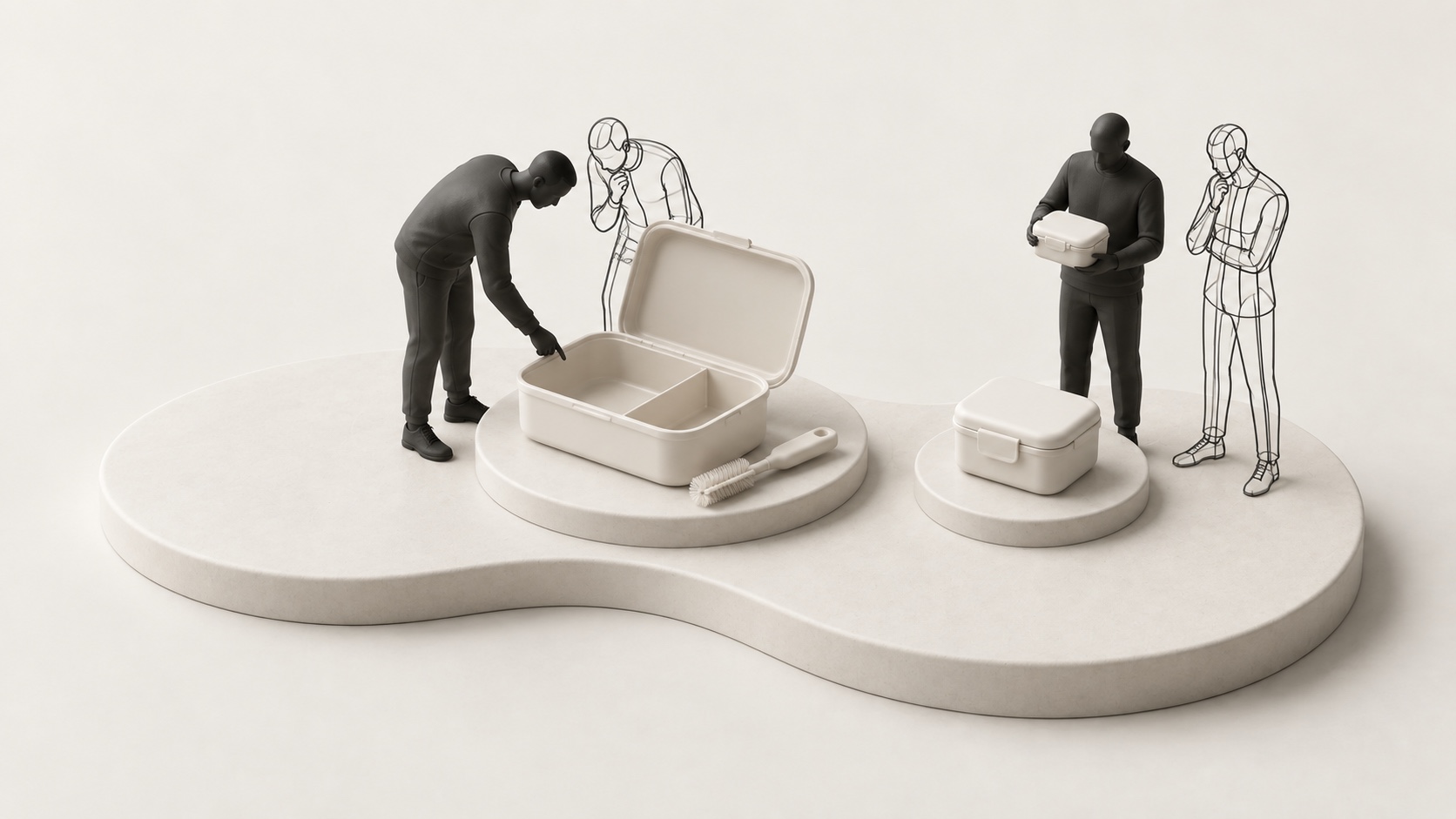
In this hypothetical study, a lunch-container team wants a claim about easier everyday cleaning. It needs wording that explains the supported benefit without adding a promise the product cannot meet. A claim matrix connects each candidate with the meaning to investigate and the evidence to check.
Candidate and intended meaning | Interpretation and product evidence |
|---|---|
“Made with 40% recycled plastic”: stated proportion of material | Interpretation to investigate: The entire pack is recycled or recyclable Product evidence to check: Verified material composition and scope |
“Keeps your lunch fresh”: useful storage experience | Interpretation to investigate: It prevents spoilage or extends a specific shelf life Product evidence to check: Performance evidence for that precise promise |
“Easy to clean”: convenient cleaning | Interpretation to investigate: It is dishwasher-safe or stain-proof Product evidence to check: Supported use, care and performance conditions |
The entries under “Interpretation to investigate” are possible meanings, not findings. The study checks whether buyers actually read those promises into each line.
Book a demo to discuss simulated interpretations of your actual claim in its pack or ad context. See our comparisons with human research and keep the product evidence with the team responsible for it.
View an example study to see the audience, offer and findings before planning your own.
Unaided explanations come before ratings
Show the claim with its actual imagery, qualifiers and nearby pack copy. A disclaimer away from the headline may be harder to notice than on a clean research slide.
A claims-test questionnaire to copy
Copy the questions below into the study, keeping the complete pack or ad version with the answers. Record who answered, the claim they saw and any missing responses. Ask the interpretation questions before the ratings so the rating doesn't supply the meaning.
- What does this statement mean to you?
- What would you expect the product to do because of this statement?
- What would you not expect it to do?
- Which part, if any, is unclear?
- What makes the statement believable or doubtful?
- What information would you look for to check it?
- Does this change whether you would consider the product? Why?
Group answers by the meaning buyers heard before calculating agreement. “I believe it” does not tell you which product promise they believe.
One phrase can create three different promises
For “Easy to clean,” the same sentence could create three different promises:
What the buyer might say | Meaning and next action |
|---|---|
“I can reach the corners with a sponge.” | Meaning and evidence to check: Accessible shape: check the actual opening and cleaning task Next action and owner: Product design verifies access; marketing writes precise copy. |
“I can put it in the dishwasher.” | Meaning and evidence to check: Dishwasher safety: check the supported care instructions Next action and owner: The care-evidence owner verifies the condition; marketing clarifies unsupported implications. |
“It will never stain.” | Meaning and evidence to check: Stain resistance: check the material evidence and its scope Next action and owner: The material-evidence owner reviews the promise; marketing narrows the wording and retests. |
Read the meanings before averaging credibility scores. A believable statement can still communicate the wrong promise.
Matched cards show which meanings the claim adds
The three answers above concern a card with the claim. Without a comparison, you cannot tell whether the wording caused the dishwasher or stain expectation. Buyers might already assume those properties from the category, image or container shape.
To check what the claim adds, randomly assign target buyers to cards with the same product, image and context:
Arm | Copy and evidence |
|---|---|
Neutral control | Copy that changes: “Lunch storage container” Evidence to compare: Baseline expectations without the cleaning claim |
Original claim | Copy that changes: Control plus “Easy to clean” Evidence to compare: Whether the claim adds unsupported meanings |
Concrete candidate | Copy that changes: Control plus “A wide opening helps you reach the corners while washing” Evidence to compare: Whether the mechanism preserves the intended meaning and reduces unintended ones |
Ask every group “How would you expect to clean this container?” before mentioning a dishwasher or stain resistance. Before launch, define answer categories for washing access, dishwasher safety and stain resistance. An answer can belong to several categories. Count an expected benefit only when the answer expresses that expectation; a mention or denial is not enough.
Keep the original answers, other meanings, uncertainty and missing answers. Hide group labels from the people classifying answers where possible, then resolve disagreements before comparing groups. Show how many valid answers each percentage uses. Because one answer can express several expectations, the percentages need not total 100%. Ask detailed follow-up questions afterward.
For example, a control answer might say “I would check the care label,” while an answer in the claim group might say “Probably dishwasher-safe.” These are examples of a difference to investigate. Two answers do not establish a measured increase. If everyone sees the claim, describe their interpretations and use a follow-up to investigate prior expectations.
Put each promise beside the team that can check it
Marketing owns the wording and which elements stand out. Product teams own the care instructions and evidence about materials or cleaning methods. The appropriate review team checks the final claim and its support for the intended market. Give each team the actual meaning buyers heard, rather than one average credibility score.
A buyer who says the opening lets a sponge reach the corners has understood the proposed mechanism. A buyer who infers dishwasher safety has added a different property. Keep those answers separate even if both rate the line believable. Check whether the revised wording explains washing access while keeping the care conditions clear.
Use the complete final pack image for this decision. A headline, a dishwasher icon and a small care line form one encounter. Removing the icon only in the survey would test a version the buyer never sees. Save the pack version, the arm and the open answer so the recommendation can point to the actual element to change. Use our packaging design testing guide to plan the shelf or listing encounter around that claim.
The container’s interpretation study
Compare the neutral product card, “Easy to clean” and the wide-opening explanation under matched conditions. Ask how people expect to clean the container before asking which visible cue gave them that expectation. Replace the broad line if it adds an important unsupported meaning and the specific explanation is understood.
The same approach applies to “Set up in minutes.” Define what setup includes, which buyer and environment the promise covers and what product evidence supports it. Ask buyers what they expect the clock to cover. Their interpretation does not supply a product-performance record.
Clear claims still compete for the lead
After checking understanding and product support, you may still have several benefits competing for one headline. Compare the wide-opening explanation with “Made with 40% recycled plastic” only after checking the composition records and what that material statement covers. This comparison asks which supported benefit should lead.
Someone who hand-washes containers may value access to the corners. Someone else may care more about the material. Clear wording alone does not tell you which benefit matters. Connect each benefit to a reason to choose this container at its actual price.
Randomly assign eligible buyers from the same intended audience to one complete pack version each. Keep the product, brand, price, image, headline space and exposure conditions matched; change the candidate claim. Ask for the unaided explanation first, then collect the same ratings for each version. SurveyMonkey’s message-testing guidance also separates clarity, credibility, relevance and uniqueness. Those measures answer different questions, so keep their results separate.
Measure | Question and interpretation |
|---|---|
Relevance | “How relevant is this benefit to the way you use a lunch container?” A clear claim may describe a benefit this buyer doesn’t need. |
Credibility | “How believable is this statement about this container?” Follow with “What makes you say that?” This reveals doubt or a reason to believe; it doesn’t verify the product claim. |
Stated interest | “At the price shown, how likely would you be to consider buying this container?” This measures stated consideration under the test conditions. |
Use the same fully labeled scale for each measure in every group. Relevance could run from 1, “not at all relevant,” to 5, “extremely relevant.” Decide how to summarize it before collecting answers. Show all rating shares and how many people answered each question. An average can hide a split audience. Report missing answers and whether responses came from people or a simulated audience.
Choose the buyer groups before seeing the winner. Cleaning habits matter here: hand-washers and dishwasher users may want different benefits. Show each group’s answer count with its result. A strong average from a small group needs investigation before it can support a recommendation for that group.
If buyers understand the cleaning line but do not value the benefit, a bigger headline will not fix the problem. If they like the material claim because they think the whole container is recyclable, revisit its meaning and support. The main benefit should be useful without relying on an extra promise.
If the pack has room for two claims, compare the complete pair with the strongest single-claim version. Conjointly treats individual claims and claim combinations as separate testing jobs. Two popular lines may repeat the same reason to buy or compete for attention; their individual scores don’t show what the combined pack communicates.
A randomly assigned neutral pack without the claim can help show whether the line changes stated consideration under matched conditions. A survey answer is still not a sale. A later controlled test of the final listing or campaign can compare actual clicks or purchases for the same offer.
Qualifiers belong in the real encounter
A qualifier visible on a research slide may disappear from a cropped ecommerce image. Show the final headline and nearby explanation together. Ask the participant to explain the whole promise and say what supported that meaning, without first pointing out the qualifier.
If the headline still creates an unsupported expectation, putting a caveat lower on the pack will not fix it. Revise the main words or presentation and test that version. Interpretation research helps with the edit; product and legal reviewers must assess whether the supported statement can be used in its intended market.
Questions about claims testing
What is product claims testing?
Product claims testing examines a particular product statement in its pack, ad or listing. Ask buyers what they expect the product to do, then compare supported wording under matched conditions. For the lunch container in this guide, “easy to clean” could mean washing access or dishwasher safety. The interpretation study identifies the meaning to check; the relevant product records must support that meaning before the team uses the claim.
What is the difference between claims testing and message testing?
Claims testing focuses on a specific product promise: what buyers think it means, whether they believe it and whether they value the supported benefit. Message testing can examine a broader proposition, headline or campaign, including its clarity, relevance and appeal. A product claim within that message still needs its own support; favorable reactions do not establish that the product can deliver it.
The lead claim has to be clear, supported and worth choosing
A wide opening helps you reach the corners while washing.
Use the wide-opening line when washing access is the supported benefit. Show it with the actual pack image and cleaning instructions. If buyers still find it attractive because they expect dishwasher safety, revise the prominent wording or image. Small print cannot do that job.
A more precise claim can change who wants the product. The wide-opening line offers easier hand-washing. If your buyers mainly want dishwasher convenience, reconsider the product or target audience. That is a different question from whether they understand the sentence.
Keep a claim when buyers’ important expectations match what the product can support. Narrow it when a qualifier or concrete explanation clears up the ambiguity. Replace it when its main attraction depends on an unsupported promise.
With Sapien, our team builds a simulated audience built from data, runs the claims comparison and returns an interactive report with simulated responses, segment differences and a recommendation for the wording.
For the container, the report should show what each line means to buyers, which groups value the supported benefit and which wording should lead. Revise a cleaning claim that relies on dishwasher safety. Take a clear hand-washing benefit into the final pack test if it matters to the target buyers. Keep the product evidence and appropriate review beside that recommendation.
For a broader campaign promise, see our message testing guide.