
ChatGPT and Claude Briefs: Sapien Research Handoff
Prepare a manual ChatGPT or Claude brief from approved Sapien research. Use source checks, two copyable prompts and a claim review before approving new copy.
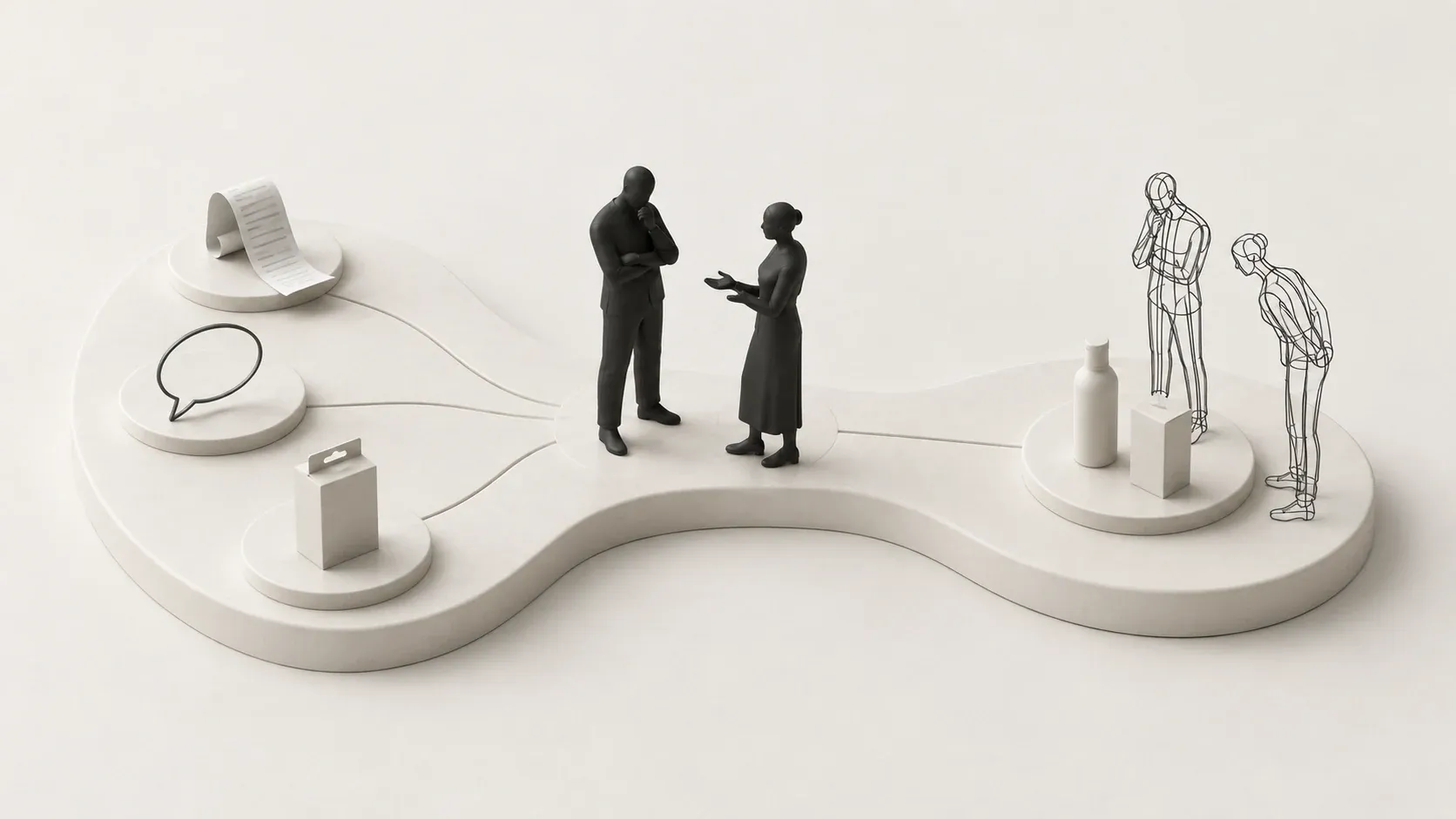
To turn Sapien research into a ChatGPT or Claude brief, supply approved findings, confirmed product facts and one clear writing assignment. First check what the assistant can read, then review how its draft uses the evidence. Keep the sources and label new copy as a candidate for further testing.
Prepare the package manually from material you are authorized to use. Keep it small enough to check and detailed enough to explain why the research recommendation was made.
Example: a landing-page brief for a planning app
Tern is a hypothetical planning app for small agencies. Its marketing lead needs a landing-page brief after exploring two messages with a simulated audience. The task is to explain the app and identify the product proof to place beside it.
The invented example readout says some simulated respondents read “Your week, handled” as automatic work allocation. The defined product helps a manager organize a plan. These are teaching findings, not results of a Sapien study.
The next assignment is to address that misunderstanding in a landing-page brief. Asking a chatbot to “make this research into a winning campaign” leaves it guessing at how strong the evidence is and what you want back. Asking for two hero concepts, the reasoning behind them and the product proof each needs gives the team something it can review.
Three documents give the source package clear roles
Use an approved copy of the research material, a product-facts document and a short assignment. You can paste a concise package into the conversation or attach supported documents. OpenAI's evidence-synthesis guidance recommends inventorying the source corpus, keeping findings distinct from interpretation and checking citations against originals. Anthropic's file-upload guidance explains how to attach documents in Claude and which formats it supports.
Choose material your organization permits you to share with the selected account. A finished report can still include confidential client information or identifiable customer quotes. Review it before transfer, and use a redacted or summarized version where that gives the assignment sufficient context. The account's applicable terms and your organization's rules govern that transfer.
For Tern, the package could contain three plainly named documents:
- Study summary: the audience, objective, stimuli, questions, modeled findings and limitations, with page or section references back to the approved readout.
- Product facts: what Tern does, what it does not do, the current user flow and which screenshots or demonstrations are available as proof.
- Writing assignment: the reader, page placement, required deliverable, voice and constraints on claims.
If the report is interactive, provide the relevant authorized material in a readable form and keep a reference to the original view. A chatbot should not have to guess at an inaccessible dashboard.
Label the evidence clearly inside the summary. Keep the difference between a simulated response, a real customer quote, a measured behavioral result and the team's interpretation. Include the original question and the version of the message that produced a reaction. A quote about one headline should not appear to support a revised headline that nobody has yet evaluated.
Confirm the material was read before asking for copy
A successful attachment is not proof that every table, chart or image was interpreted correctly. Ask for a brief source inventory first, then check it against what you provided.
For Tern, that instruction might be:
Read the attached study summary, product facts and writing assignment. List the documents and the sections you can access. Summarize the audience, the messages actually tested, the evidence type and the main limitations. Identify missing or unreadable material before drafting. Treat simulated responses as modeled evidence. Do not infer results for an untested message or invent a product capability.
Check the inventory. If the product notes are unclear about automatic allocation, correct the approved notes first. If the notes are clear but the assistant misread them, ask it to restate the capability with its source. Continue when that source check is accurate.
Tables deserve a direct check. Confirm the column labels, units, audience bases and which version each result belongs to. If a chart is the only place a finding appears, include a readable explanation of the relevant values. Keep the original nearby so the team can verify the summary.
The draft should explain its choices
Once the source inventory is correct, give the writing assignment. Keep the requested output focused on the decision the team is ready to make.
Draft two landing-page hero concepts for Tern's agency-manager audience. Each should include a headline, supporting sentence, button text and a description of the product proof needed beside it. Use only confirmed capabilities from the product-facts document. Address the mistaken expectation that Tern allocates work automatically. For each concept, explain which finding motivated the choice and cite the supplied document and section. Mark the concepts as new candidates to test. Do not claim that either has improved conversion or been validated by the study.
The response should make the reasoning easy to check. A proposed headline such as “Build a clearer plan for your team's week” might address the interpretation problem, but the team still needs to judge whether it is accurate, distinctive and useful in the actual hero. A screenshot showing a manager arranging work could support that explanation if it faithfully represents the product.
The research does not decide the final wording on its own. It gives the writer a reason to explore a direction and a problem the next version should resolve. Our message testing guide follows that relationship from a misunderstood offer to a specific revision.
Review the claims before polishing the prose
Read the draft against the source package. Check that each evidence-based statement points to the right finding and that the finding supports the statement at the level claimed. A source reference can be accurate while the sentence still overreaches.
For Tern, “some simulated respondents expected automatic allocation” is different from “agency managers want automatic allocation.” The first describes an interpretation in the illustrated study. The second asserts a market need the example has not established. Similarly, “this candidate addresses the misunderstanding” is different from saying the candidate will increase signups.
Check that proposed proof exists. If the draft requests a live demonstration of a function Tern lacks, revise the concept. If a useful question remains unanswered, carry it into the next research or product conversation rather than filling it with plausible copy.
Then edit for the reader. Remove a detailed methods explanation if it belongs in the supporting rationale rather than the hero brief. Keep the source references in the internal working document so a colleague can understand the recommendation without reconstructing the chat.
The final brief and its sources
Save the approved brief with the source versions that informed it. Record which concept the team chose, what it changed and which question the next test needs to answer. A follow-up study needs the actual revised message or page, not a summary such as “we made the headline clearer.”
This gives the team a traceable path from research to writing to the next observation. Sapien helps explore audience reactions and their explanations; ChatGPT or Claude can help organize that material into a working brief. A good handoff keeps the evidence intact and tells the next writer exactly what to produce.