
AI Research vs A/B Testing: Methods & Evidence
Compare AI audience research, observed tasks and live A/B testing. Choose the method for message meaning, task completion or actual paid outcomes.
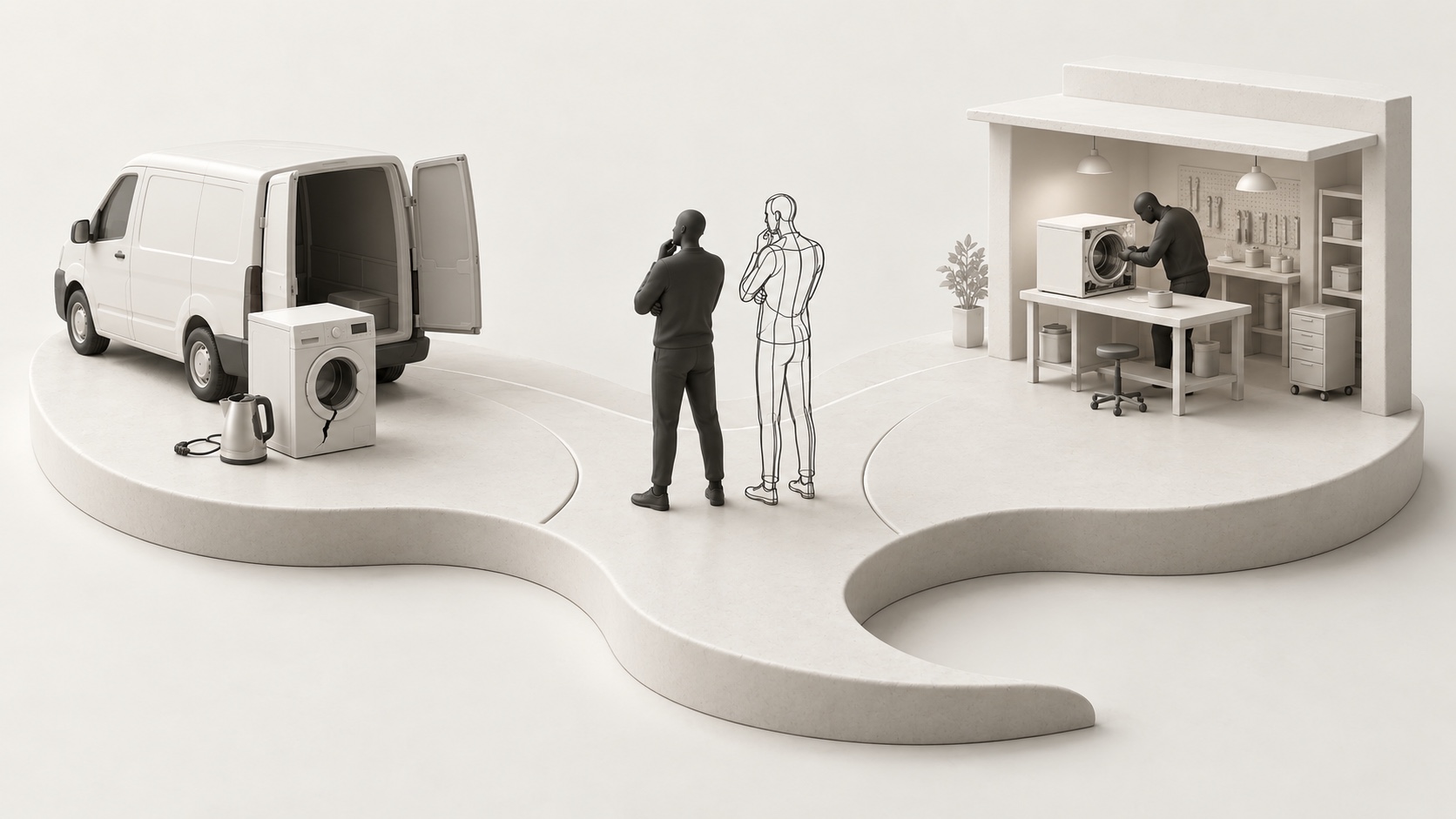
AI audience research explores how a defined audience might understand an offer and helps improve the versions to compare. A live A/B test estimates the effect of delivering a change to real users. Choose by the question: interpreting the promise, completing the task or changing an observed business outcome.
A live estimate depends on who receives each version, which outcomes you record and whether the analysis supports the conclusion. In an audience study, you also need to know which buyer groups are represented and check the responses behind a simulated preference.
The methods can work together. Hand off a version you can deliver and a clear question for the next comparison.
Example: booking a bicycle-repair appointment
Cedar is a hypothetical bicycle workshop. Customers book a drop-off; a mechanic then confirms repair scope, price and completion time. A drop-off booking does not guarantee same-day repair. The examples and counts below are teaching inputs, not collected results.
Keep two questions apart: “Do people understand what they are booking?” and “Does the changed page produce more completed paid repairs?”
Cedar is considering two headlines:
- A: “Book your repair today.”
- B: “Choose a time to bring your bike in.”
Both pages show the same workshop, service information and appointment button. The supporting line explains that scope, price and completion time are confirmed after inspection.
The first question is what customers think they are booking. If A makes someone expect a repaired bicycle that evening, a favorable reaction could be enthusiasm for a service Cedar does not offer. Before increasing traffic, the team needs to understand that expectation and choose wording the workshop can fulfill.
The second question is commercial: does the selected version lead to more completed paid repairs among the eligible people assigned to it, without creating an unacceptable increase in complaints or cancellations? An answer about the headline's meaning cannot supply that outcome.
Use AI research to improve the candidate
Give the research team the complete page, truthful service terms, intended customers and the choice you need to make. For Cedar, relevant differences could include commuters who need their bicycle back quickly and leisure riders who can leave it for several days. Customer records or earlier research can help establish those buying situations; an attractive demographic label alone does not explain the constraint.
Ask for the first interpretation before supplying a correction. What would the person expect to happen after pressing the appointment button? What would they need to know before leaving the bicycle? What would make the offer unsuitable?
Read a preference beside its explanation. A simulated answer that favors A because it promises an immediate repair identifies a misunderstanding to investigate. Another that favors B but cannot tell whether an appointment includes an inspection raises a different wording question. Keep the response connected to the exact page and buyer setup.
At Sapien, our team builds a data-grounded simulated audience, runs the agreed comparison and helps interpret the findings. You can examine audience differences and explore the responses behind the recommendation. Agree the materials, presentation conditions and task-relevant validation before using the result to approve a candidate.
For Cedar, the useful output could be a clearer appointment explanation and a reason to test it. The response remains simulated evidence. It does not record someone leaving a bicycle at the workshop, accepting a quote or paying for a repair.
Live A/B testing estimates the effect of the delivered change
An A/B test needs versions people can actually receive, an eligible audience and reliable assignment and outcome records. A campaign that shows A this week and B next week also changes time; a paid campaign sent to different audiences changes the comparison again.
State a testable hypothesis and choose the outcome before exposure. Microsoft's pre-experiment guidance connects the hypothesis with success measures, the unit assigned to a version and enough information to detect the change that matters. Those choices belong in the design, rather than being selected after a promising chart appears.
Cedar could randomly assign each eligible visitor to one page, keep that assignment consistent on repeat visits and follow whether the person has a completed paid repair within an agreed period. The design needs to account for the workshop’s actual service cycle. Five visits by one customer are not five independently assigned customers.
If the candidate changes both headline and supporting explanation, the test measures that combined revision. It cannot isolate the headline. That may be the right comparison, provided the conclusion names the whole change.
Bookings and paid repairs answer different questions
Suppose a constructed readout after the declared follow-up period looks like this. Each person contributes at most once to each outcome:
Assigned version | Eligible people and outcomes |
|---|---|
Current page | Eligible assigned people: 1,000 Booked a drop-off: 60, or 6% Completed a paid repair: 40, or 4% |
Candidate page | Eligible assigned people: 1,000 Booked a drop-off: 80, or 8% Completed a paid repair: 40, or 4% |
The candidate has 20 more bookings. The paid-repair share is 4% in both groups. Picking the candidate because it won on bookings would mean judging it on an earlier step instead of the outcome you said mattered: paid repairs.
This illustration does not establish that the versions are equivalent. A real comparison needs an appropriate uncertainty analysis and valid records. Nor do the counts explain why a booking did not become a paid repair. Cancellations, no-shows, rejected quotes, unresolved repairs and missing records need their own evidence; an absent payment is not automatically a rejected offer.
Microsoft's experimentation data-quality guidance explains the importance of stable assignment information, event timing and accurate links between records. For Cedar, check that the actual page exposure, booking and repair outcome belong to the correct assigned person. Investigate a broken link before interpreting a difference in the funnel.
Commercial tradeoffs belong in the decision rule
More paid repairs could still be unattractive if the revision creates expectations the workshop cannot meet. Keep cancellations, complaints, refunds and delivery constraints alongside the primary outcome. Decide in advance which consequences would stop or qualify a rollout.
Microsoft's post-experiment guidance discusses decisions where a success measure improves while another important measure worsens. It recommends agreeing the relevant tradeoffs independently of the result being reviewed. Cedar needs its own commercial judgment; another company's weighting rule would not settle it.
When traffic or paid outcomes are scarce, generating more simulated answers does not create additional real purchase opportunities. Use an achievable investigation to resolve the current uncertainty and keep the commercial effect open until suitable behavioral evidence exists. Our sample-size worksheet explains the separate planning problem for human proportions and two-group comparisons.
Cedar needs an accurate promise and a measure of paid repairs
Use AI audience research for meanings, feasible alternatives and buyer-group objections. Observe tasks to check whether someone can complete the booking path. Use an appropriate live experiment to estimate how a delivered change affects paid behavior.
Cedar's next move is to make the appointment promise accurate, choose the candidate it can deliver and specify the live outcome it needs to improve. That gives each method a job and gives the team a recommendation it can check.
For Cedar, specify the mistaken expectation about immediate repair, the complete page candidates and the measure of completed paid repairs. Use a study-scoping conversation with Sapien to define the audience comparison and the evidence needed before changing the live booking experience.


